Friday, December 17, 2010

LDB Site

Greetings! I hope everyone is having a wonderful holiday season. There are a number of Christmas events going on here this week and next week, so I'll have holiday photos to post soon. This week, I've got pictures from a tour that I took with some of the other janitorial staff of the Long Duration Balloon (LDB) construction facilities and launch site. The LDB site is located on the Ross Ice Shelf just off Ross Island. The program is under the purview of NASA and the balloons are built and launched by a company called Columbia Scientific Balloon Facility located in Palestine, Texas.

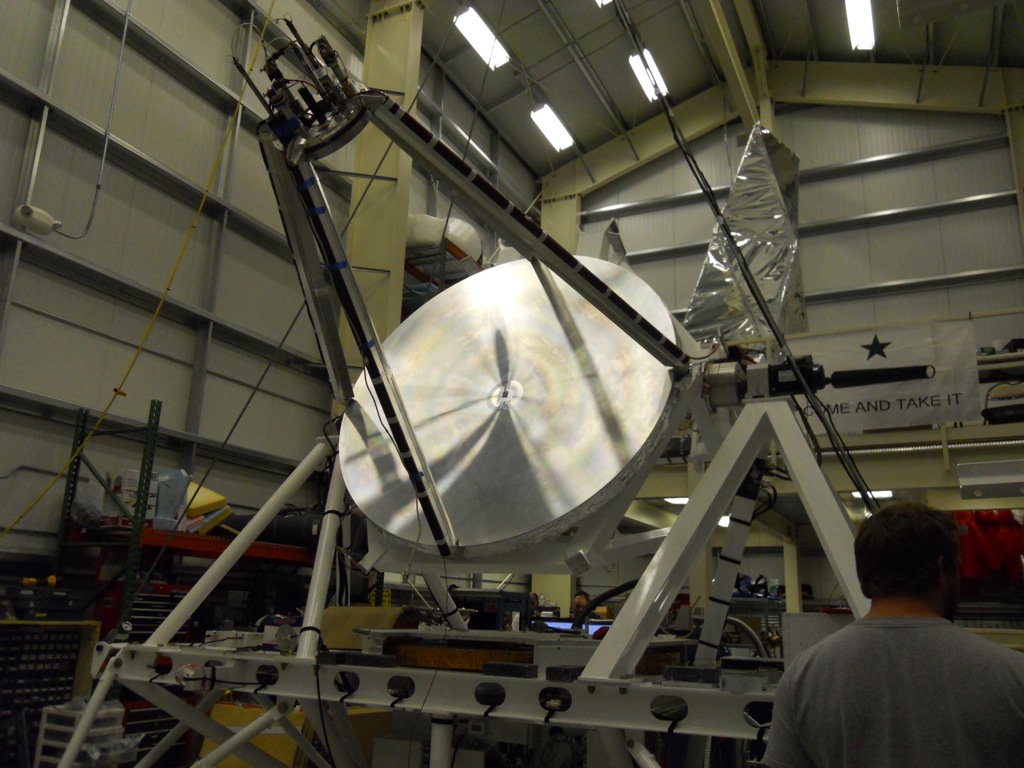
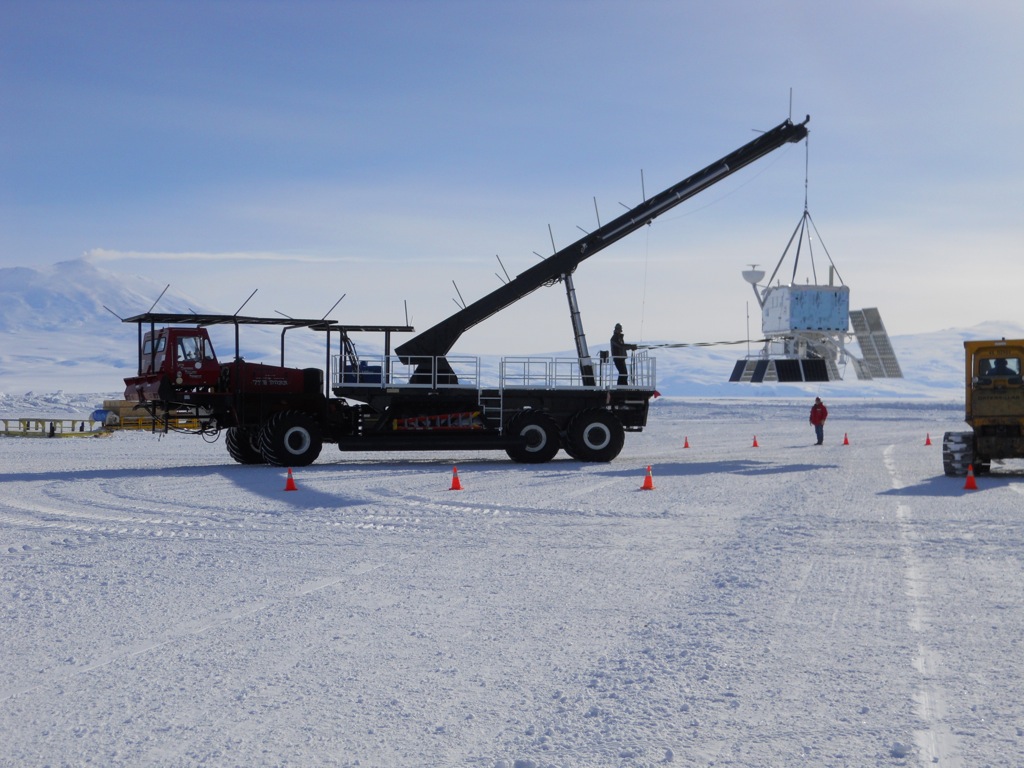
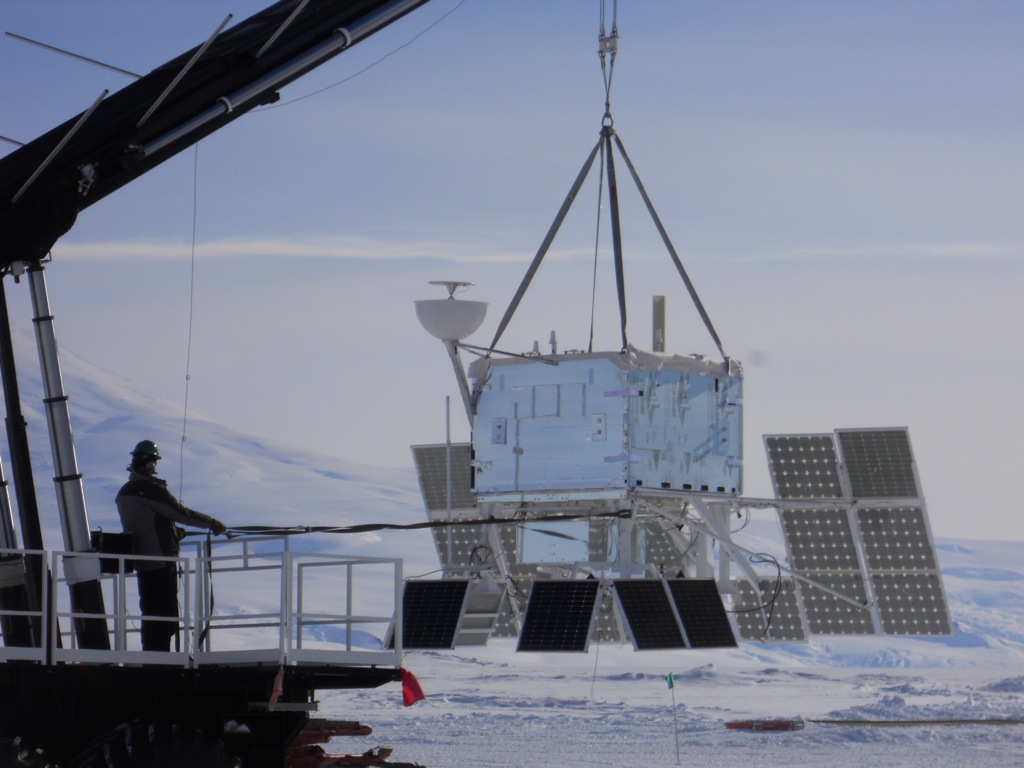
Here is one of the payloads that the balloons carry up into the atmosphere.

The scientific equipment carried by the balloon is powered with solar energy and takes all sorts of readings from the Earth's atmosphere.

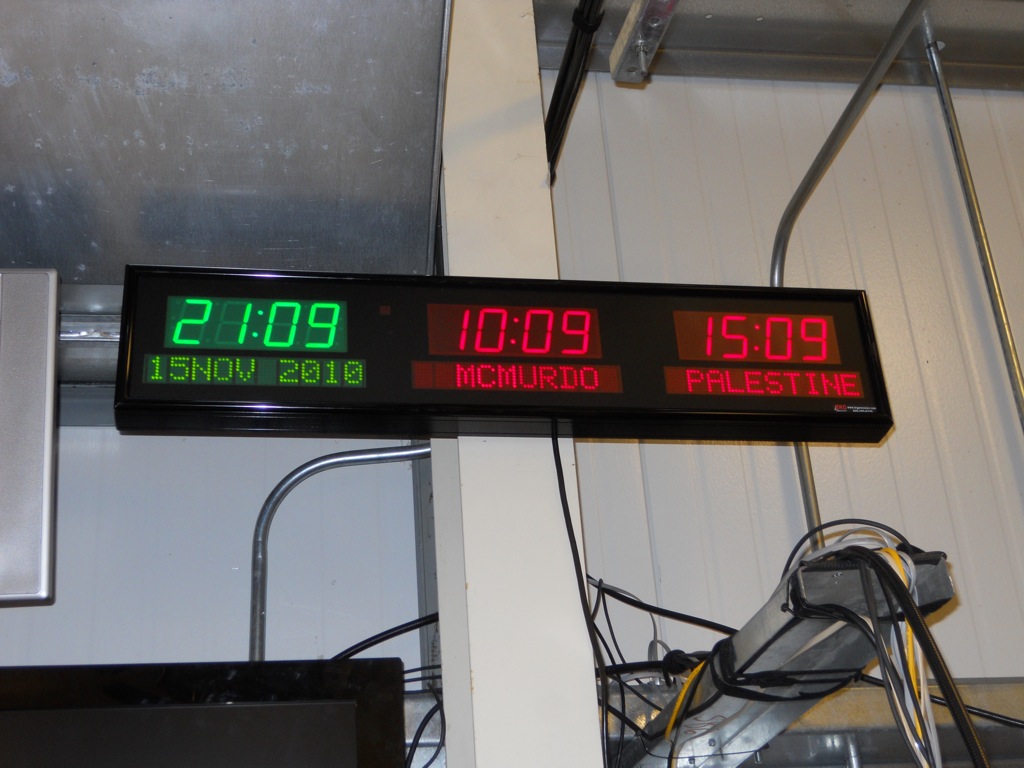
Here's the time clock at the LDB facility. The green clock is Greenwich Mean Time and the two red clocks are McMurdo time and Palestine, Texas time.

Here our tour guide shows us the parts from which they construct the long duration balloons.
Long duration balloons are like super-balloons and are different than most of the other balloons that are more frequently used in Antarctica. Most balloons are much smaller and measure data for short periods of time (several hours or perhaps a couple of days); the long duration balloons, however, fly much higher in the atmosphere (100,000 feet or more) and can stay there for three months. Here is an article about the creation of the LDB program in 2008. NASA also uses these balloons to send up equipment that does astronomical research as well.

Initially designed to stare into deep space at the furthest galaxies, this telescopic camera is now used to take pictures of areas of star creation in the Milky Way; its super-sharp camera can capture incredible details of how stars form.

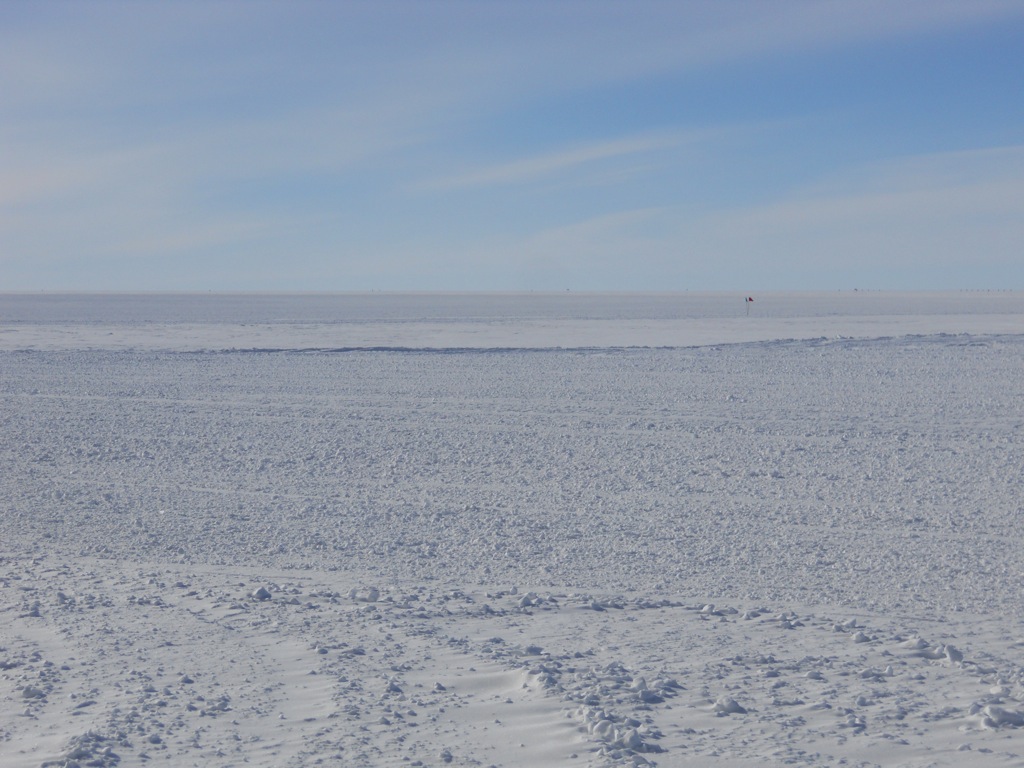
This is part of the launch site for LDB balloons, which (if I remember correctly) is about a half-mile wide. I believe that only five or so of these balloons will be launched this season, but since they can stay aloft for so long, a few balloons go a long way.

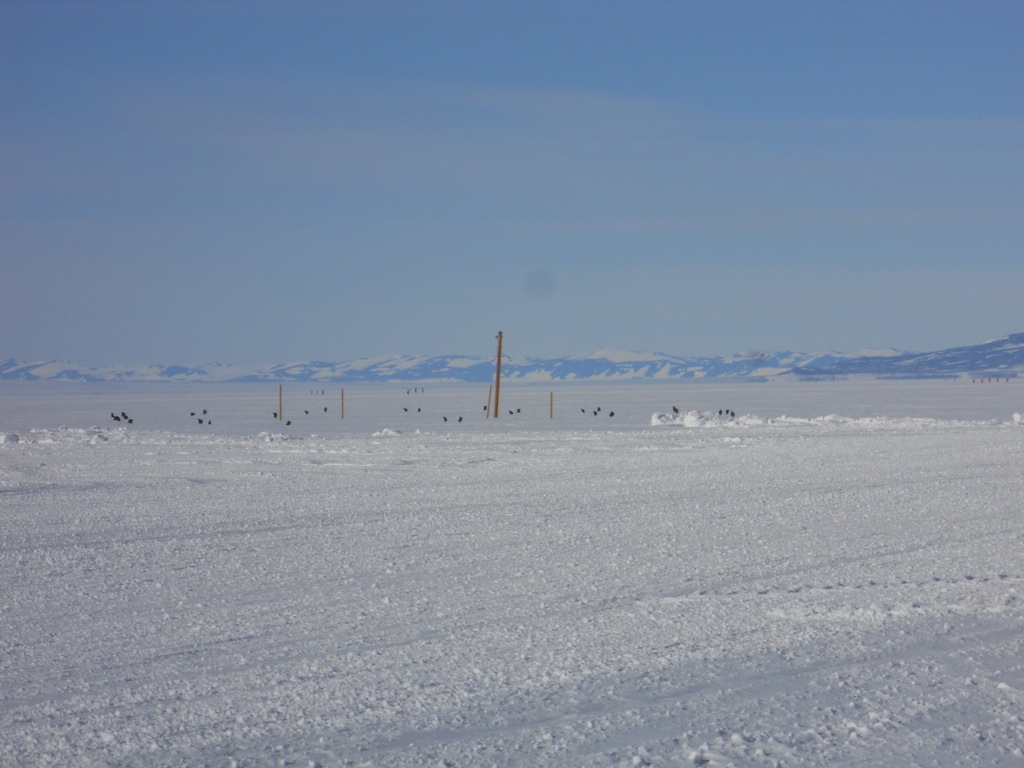
Another section of the launch site with the Transantarctic Mountains in the background.

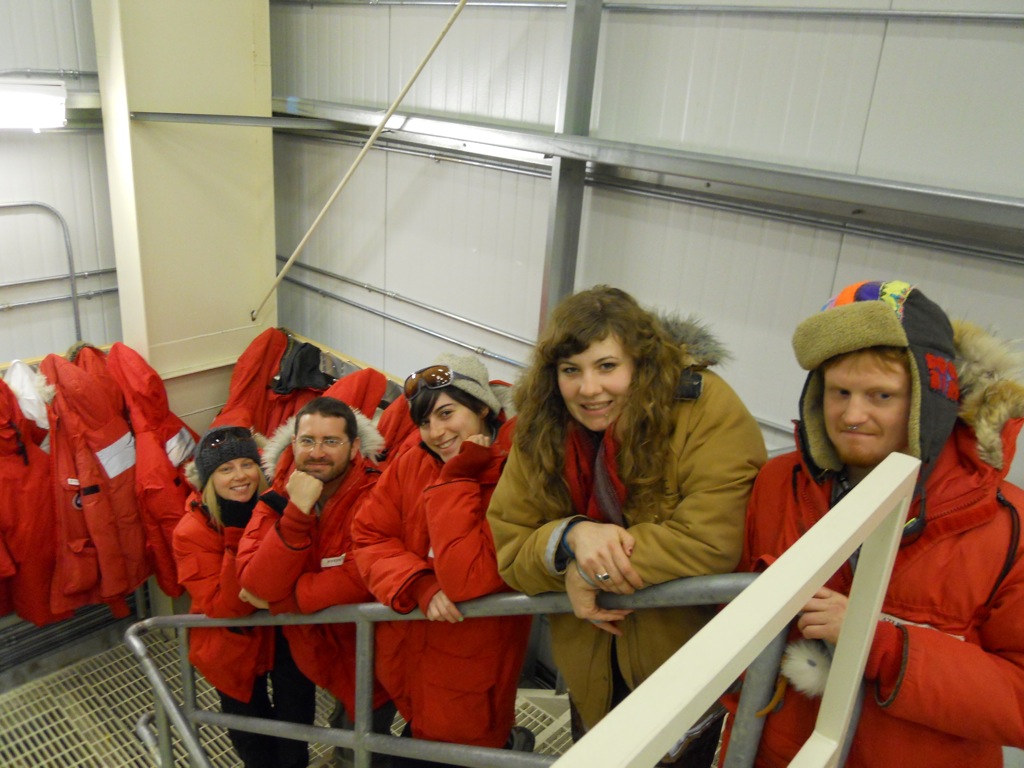
Me and some of my fellow janitors who went on this tour. (L-R): Nikki, me, Sharon, Lolo, Atlee
Part of what makes the LDBs work so well is the circumpolar winds that predominate Antarctica. It's almost as if Antarctica were a self-contained weather unit at the bottom of the planet. The winds here go in a circle (counter-clockwise, I believe) around the continent, which means that the balloons will simply circle around Antarctica over and over until they run out of steam or are knocked out of the air.

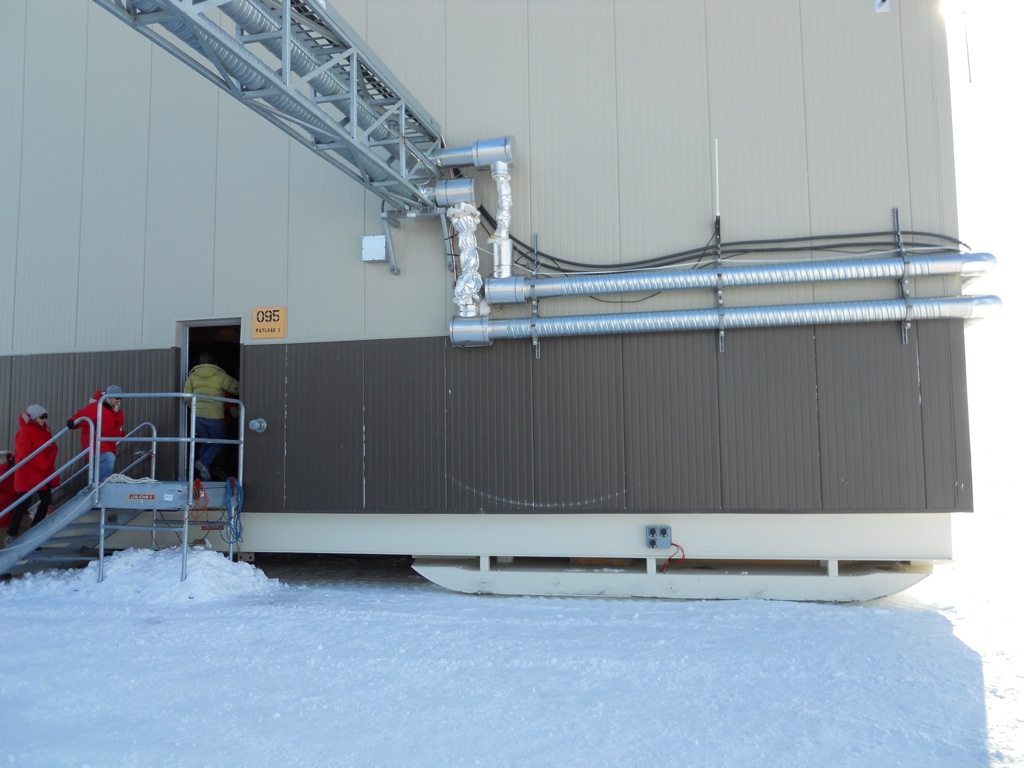
Oh, and for those who may be wondering how on earth buildings sit on top of ice, take a look at the photo below. Notice that the buildings are on "skis", which not only supports them while they are standing but also allows them to be moved easily for storage during the Antarctic winter. :)


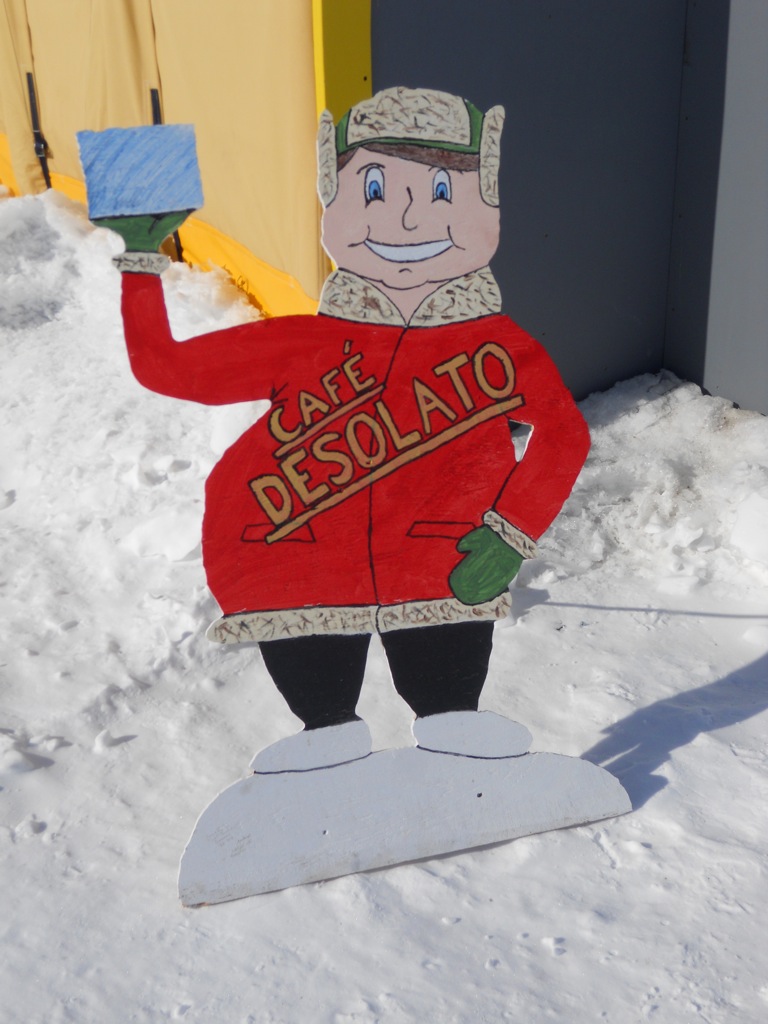
After touring the facilities, we ate lunch at the LDB galley, a.k.a. Café Desolato, and since LDB is at least a thirty-minute drive from McMurdo Station, it's easier for people to eat lunch there. The food at LDB is definitely a bit better than the food at the McMurdo galley, so eating here was a nice treat. :)


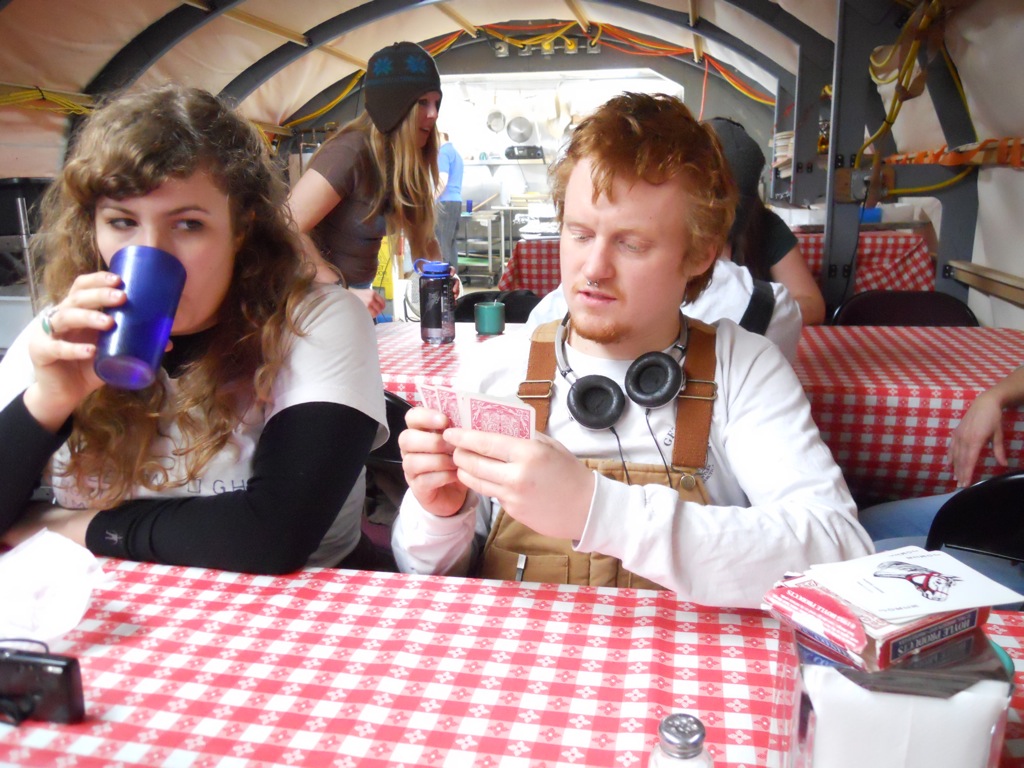
The Café Desolato


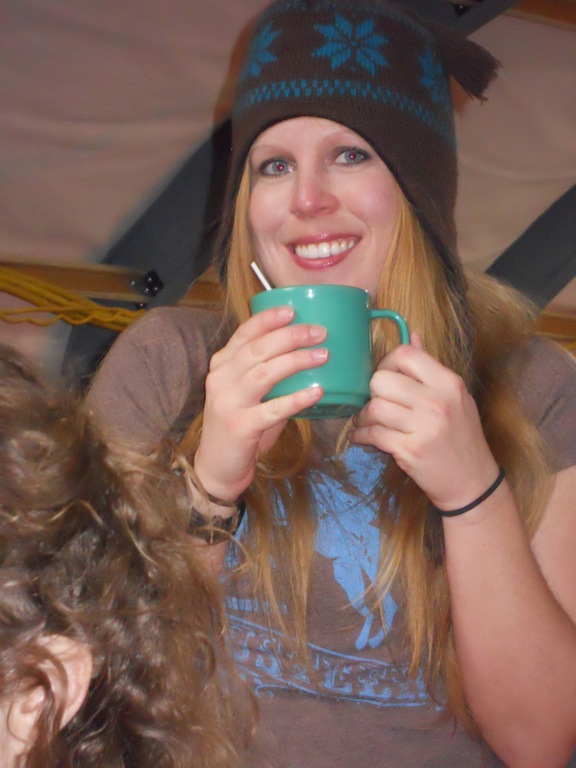
Aireana enjoys a cup hot chocolate.

Lolo and Atlee play cards while we waited for lunch to be served.

Joanie is a good friend of Larry's and mine.

A photo of Nikki taking a photo.
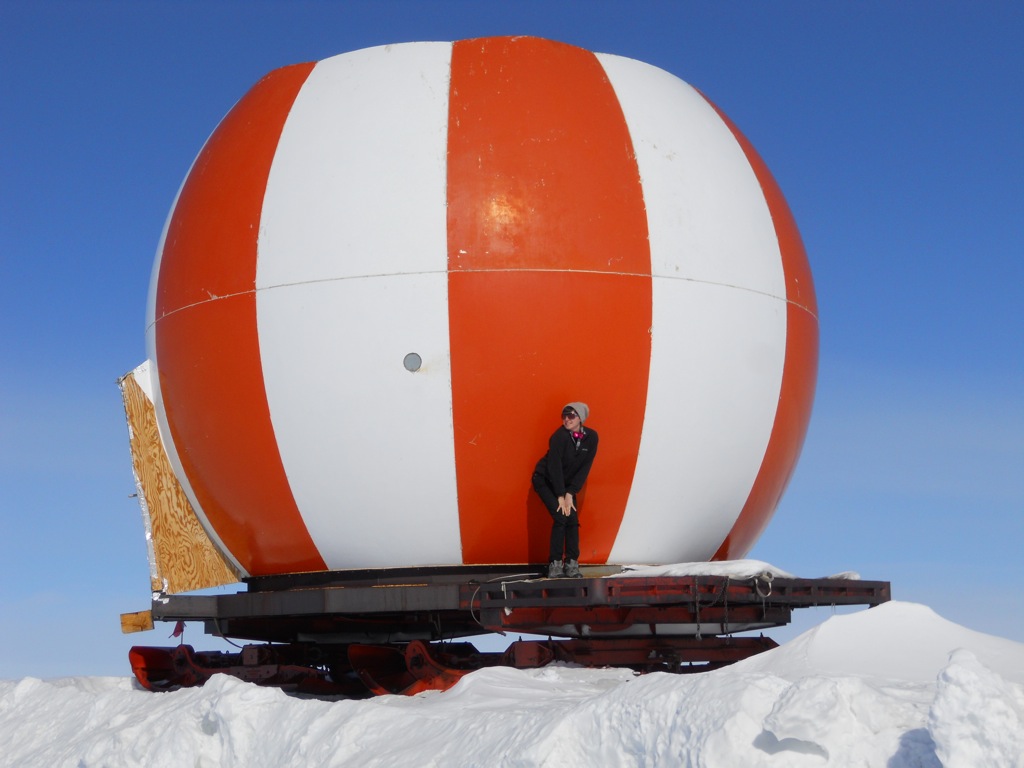
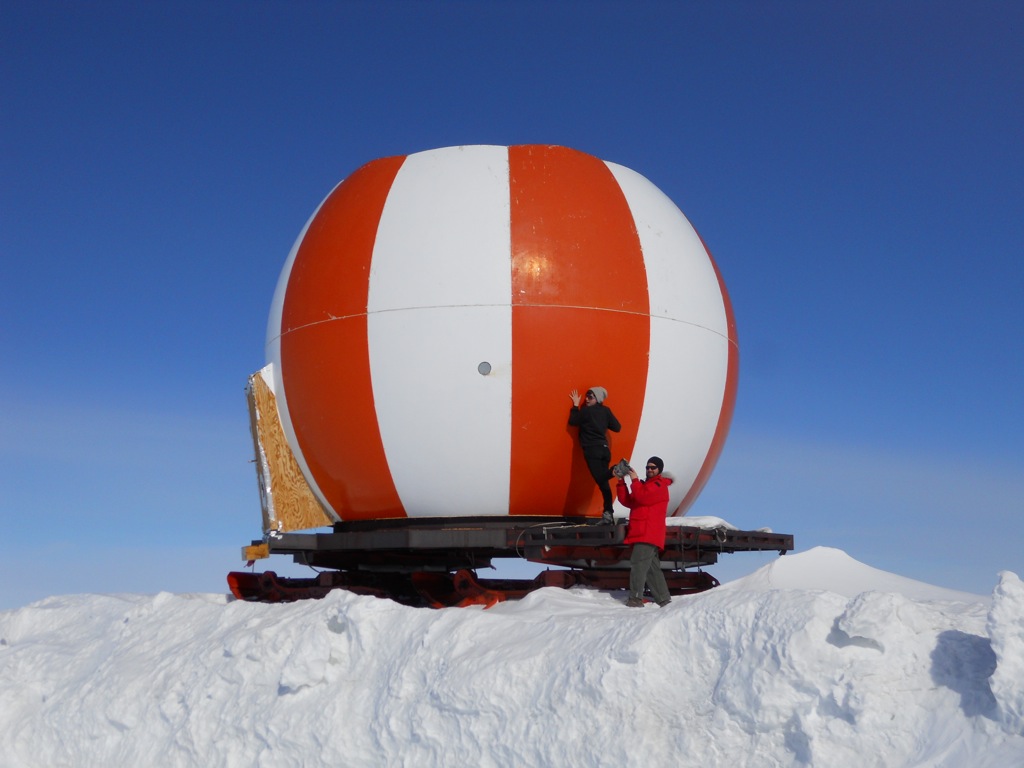
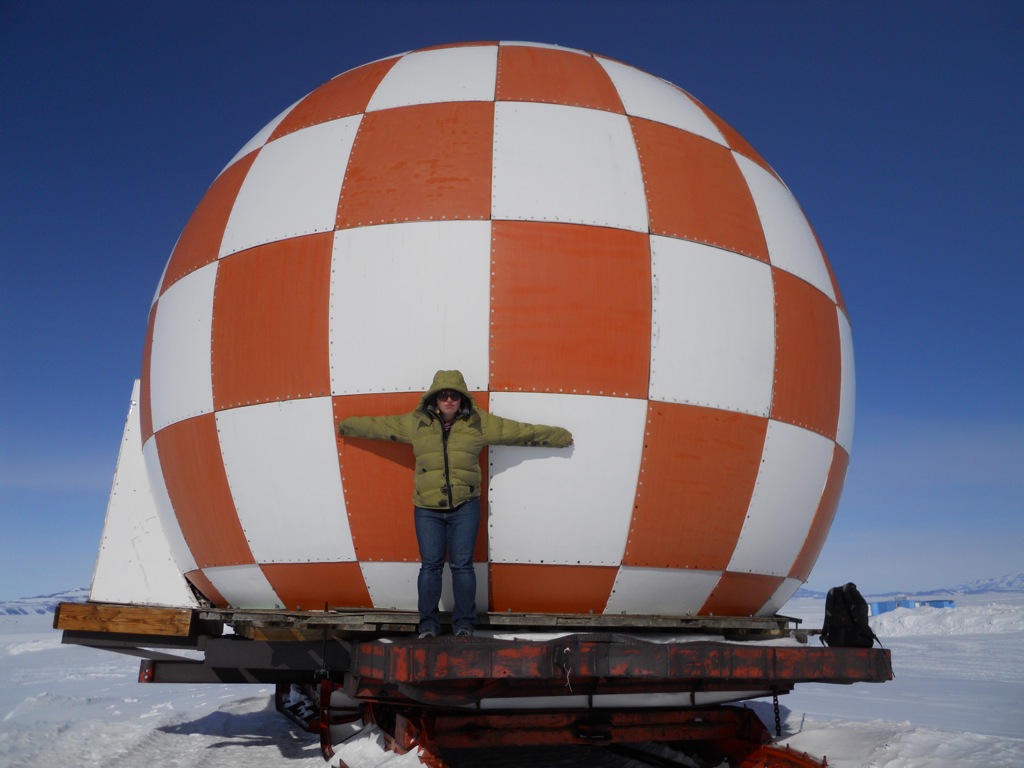
After eating our lunches, while we waited for the shuttle to take us back to McMurdo, Sharon, Liz, and I took pictures by two old spherical buildings that used to be used to store stuff over the winter. What they're used for now, we have no idea, but we had fun goofing off. :)

Sharon goofing off.

Sharon and I goofing off.

Liz goofing off.

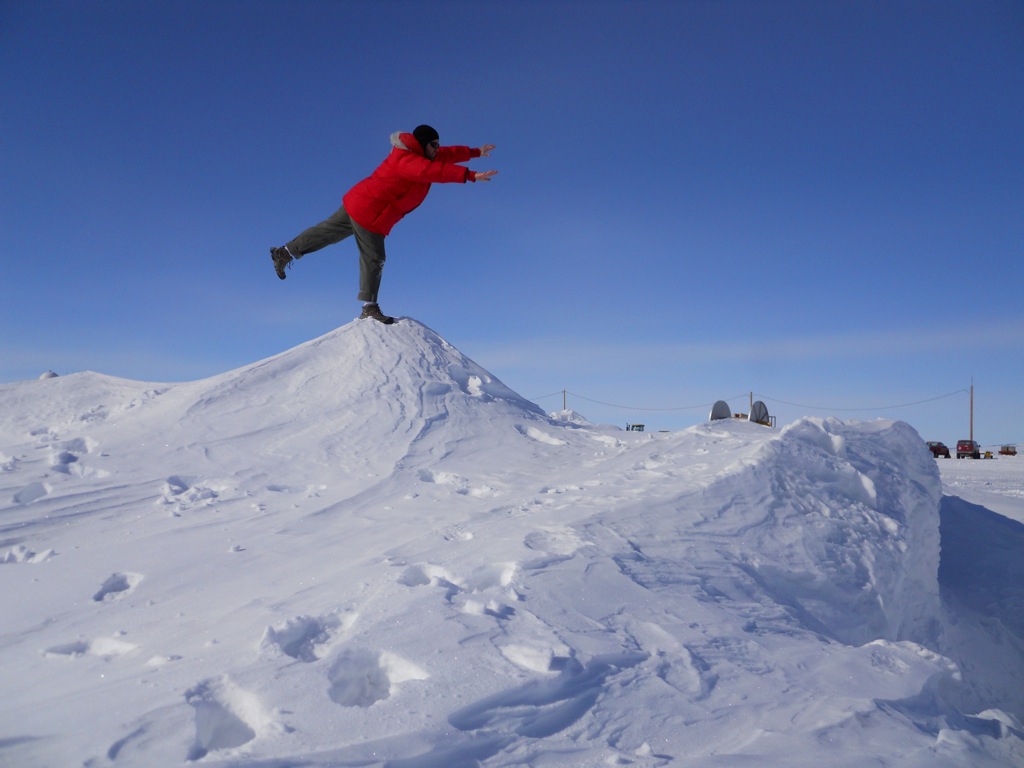
Here I am on top of a snow pile pretending I can fly.
While I wish I could talk in more detail about the scientific aspects of everything I saw, I'm happy that we were able to see the kinds of research that goes on here. It's nice to know what it is that I work as a janitor for. :)
Monday, December 6, 2010

Ice Cave in the Mt. Erebus Glacier Tongue

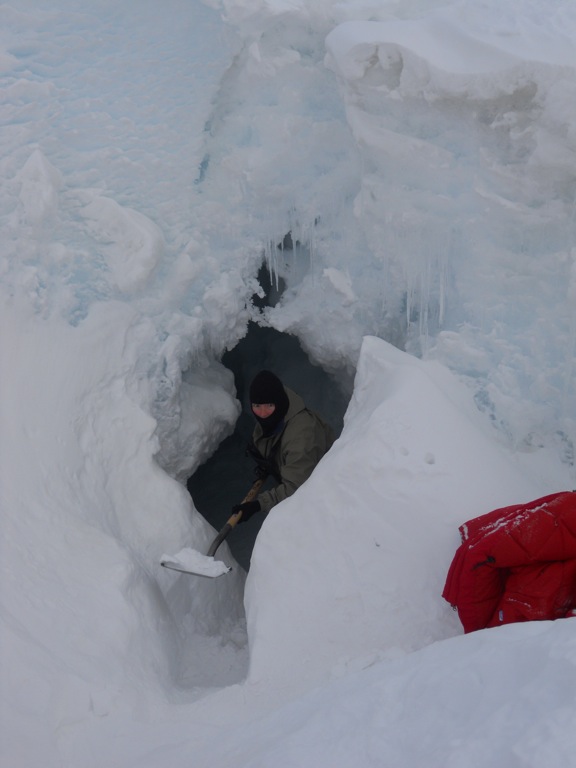
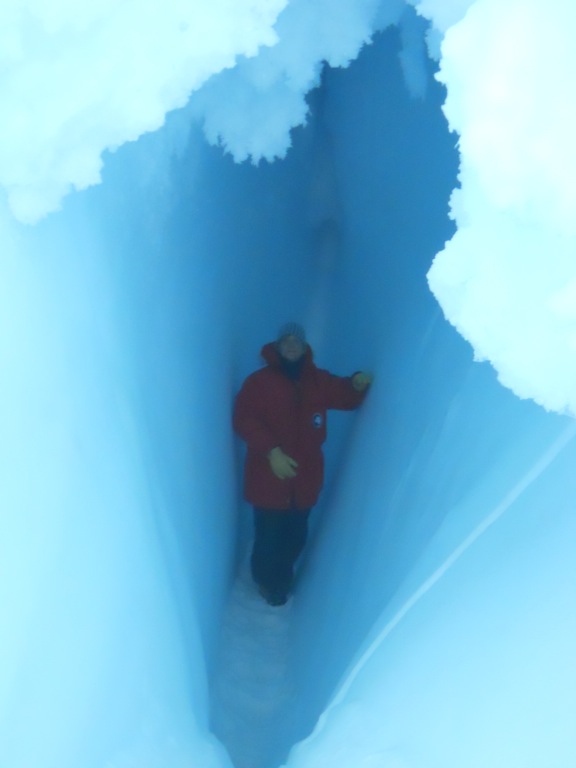
Hello again! Last week I had a chance to visit the ice cave in the Mt. Erebus glacier tongue. Spilling off Mt. Erebus onto the sea ice is a long glacier which cracks and splits in various places as it moves outward. At least one of those cracks has formed into an "ice cave" large enough for a few people to wander into. The two walls on the side formed a "V" and the ceiling was made of stunning ice crystals! Here's a map of where the ice cave is in relation to McMurdo Station.

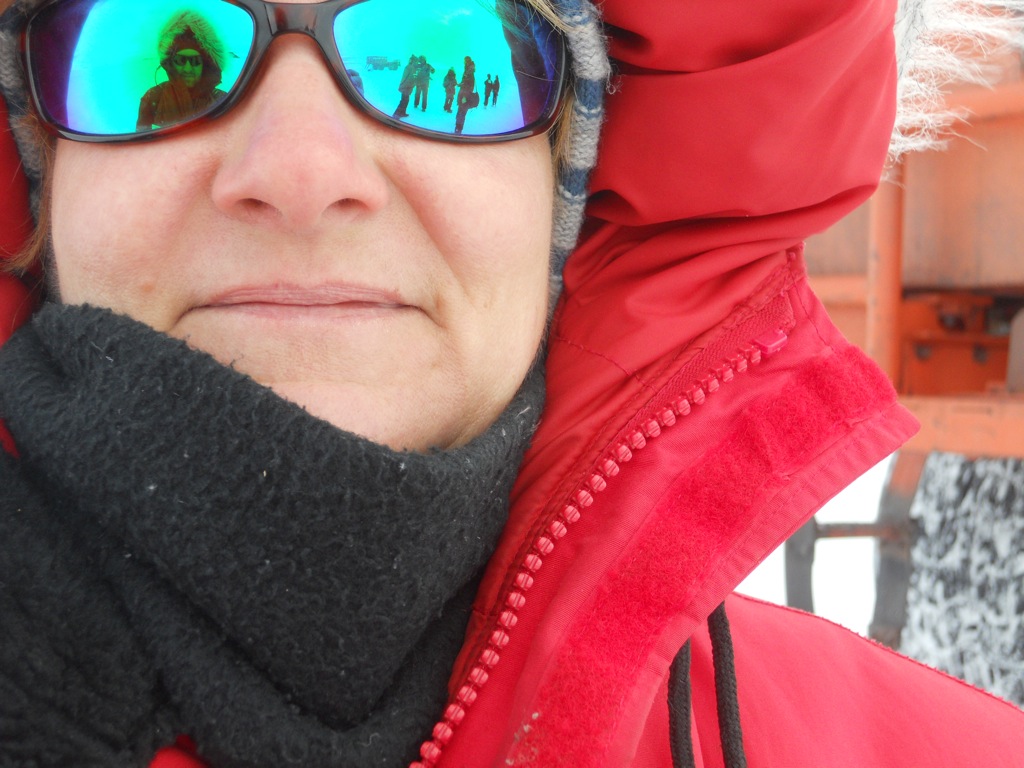
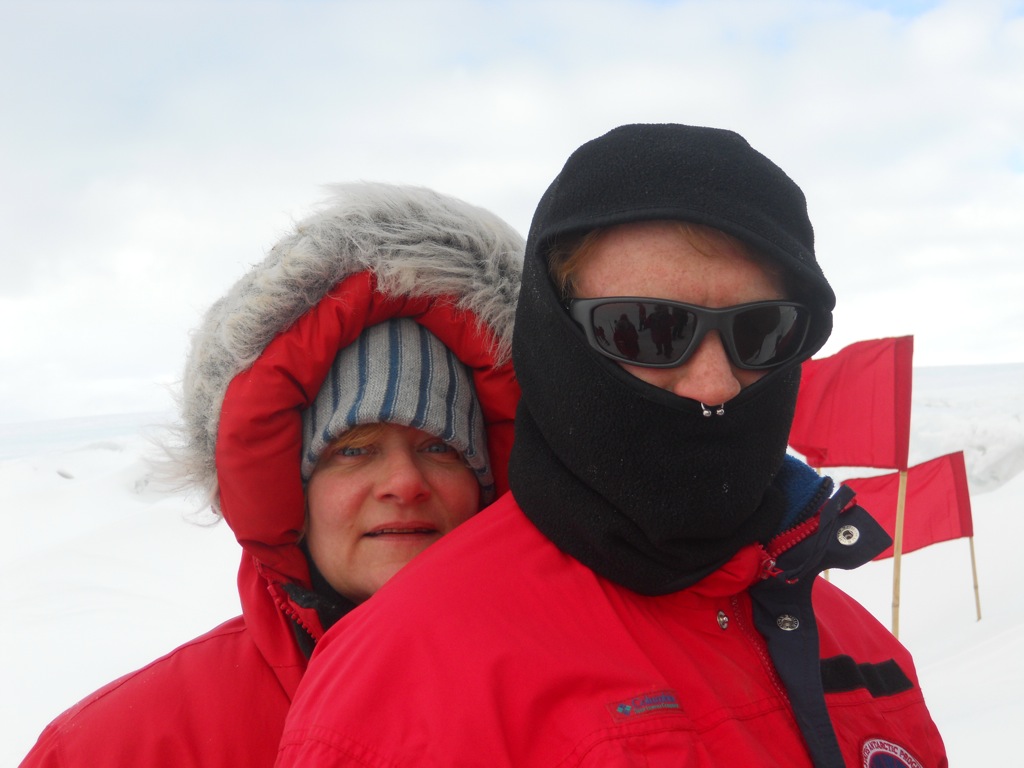
Joanie and I went to the ice cave together along with about 18 other people. While we were waiting to go inside, I took a picture of myself reflected in her sunglasses.

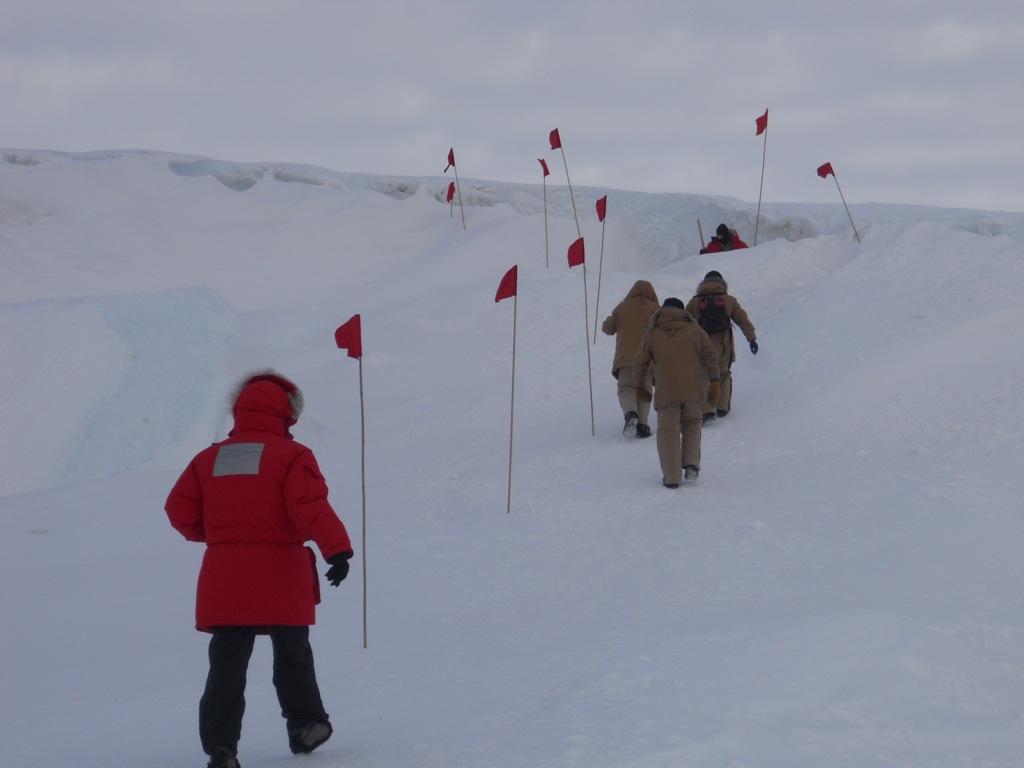
The pathway to the cave is marked with flags. The flagged routes have been verified as safe to walk on. To wander off the flagged route is to risk falling into a crevasse, which can be as deep as a couple hundred feet.
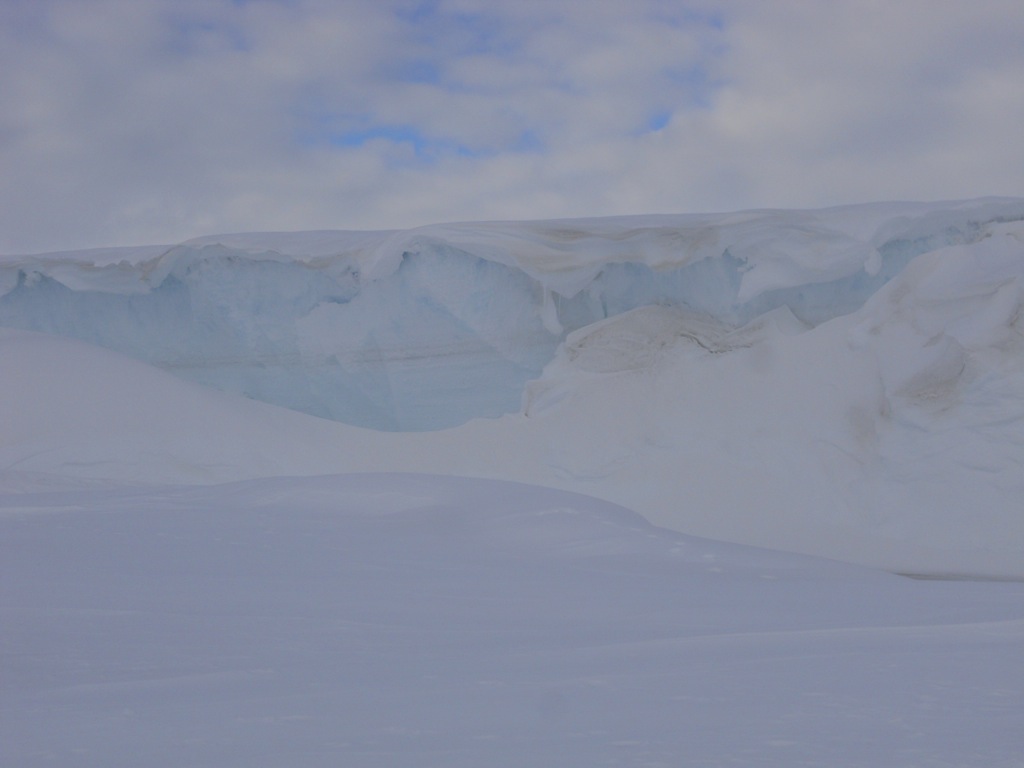
The side of the Erebus glacier tongue is full of magnificent cracks.

Inaccessible Island to the north with a view of the Erebus glacier tongue on the right.

Our tour leader shovels out snow from the entrance to the ice cave.

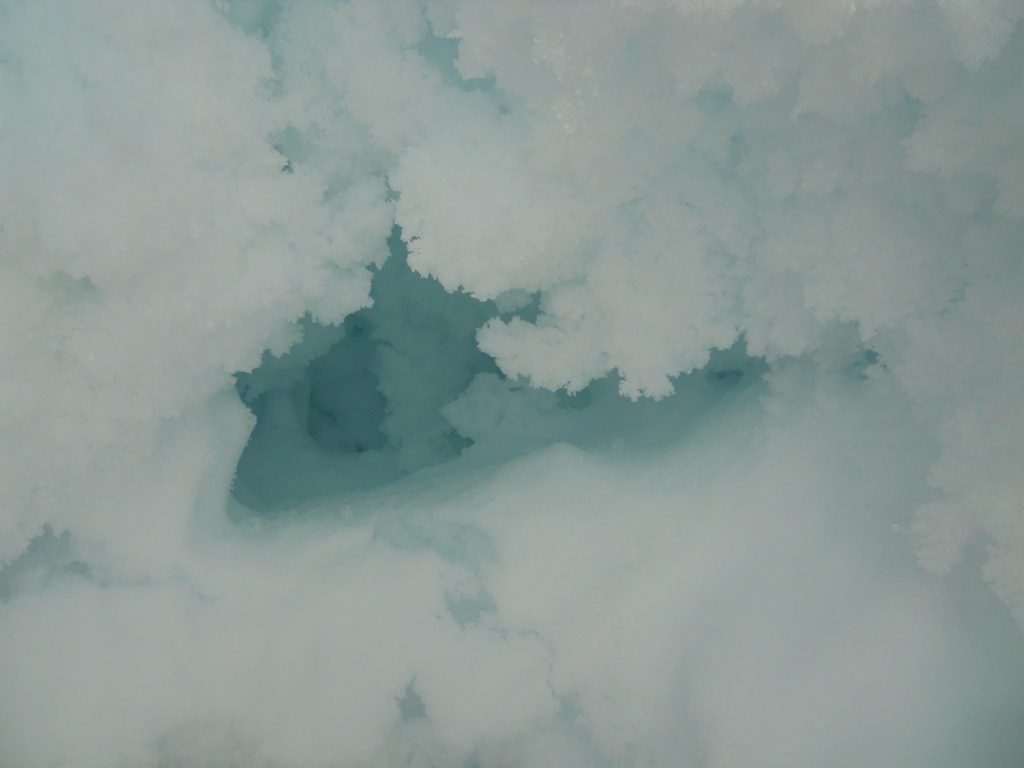
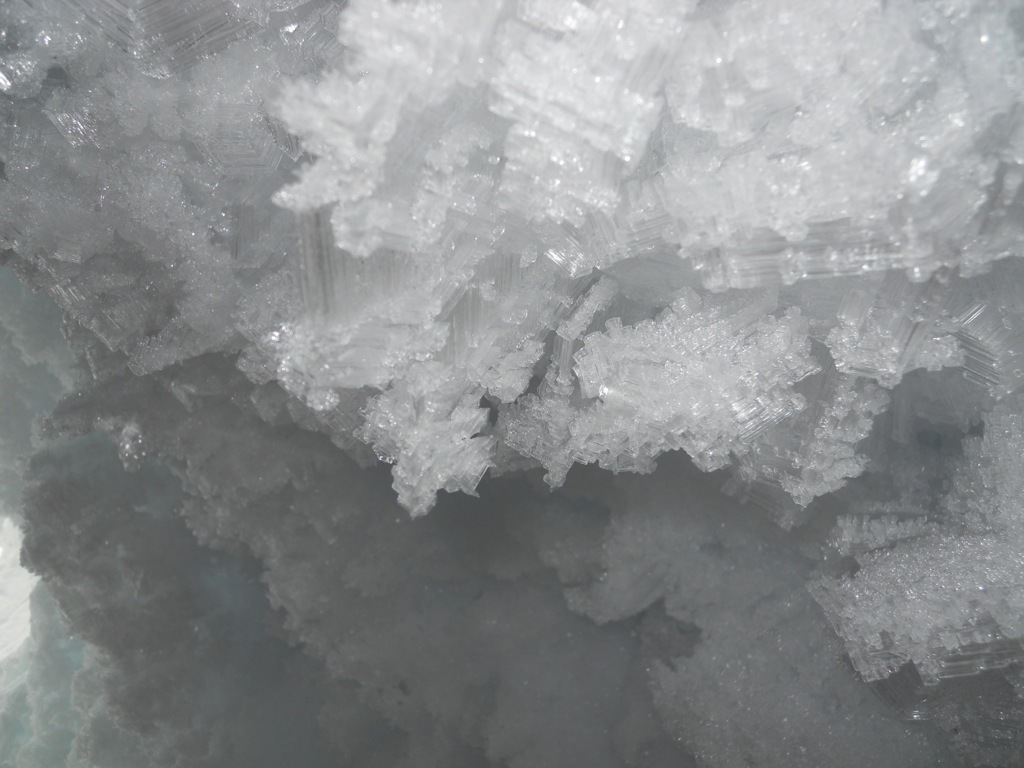
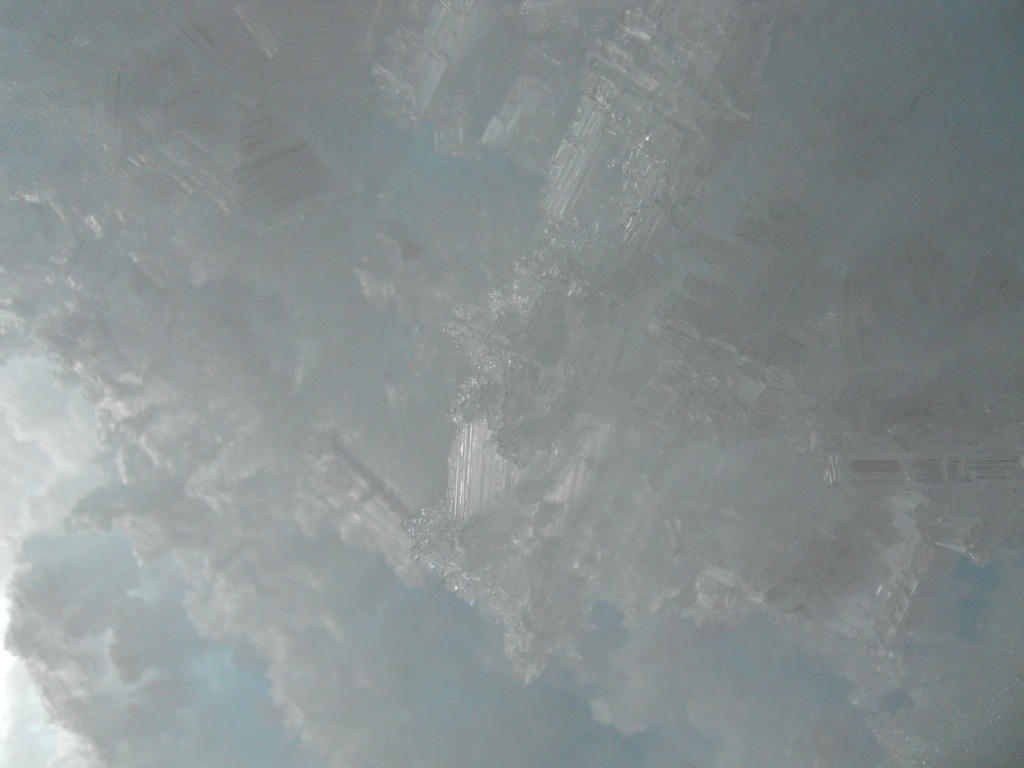
These ice crystals formed in the ceiling of the cave just beyond the entrance.

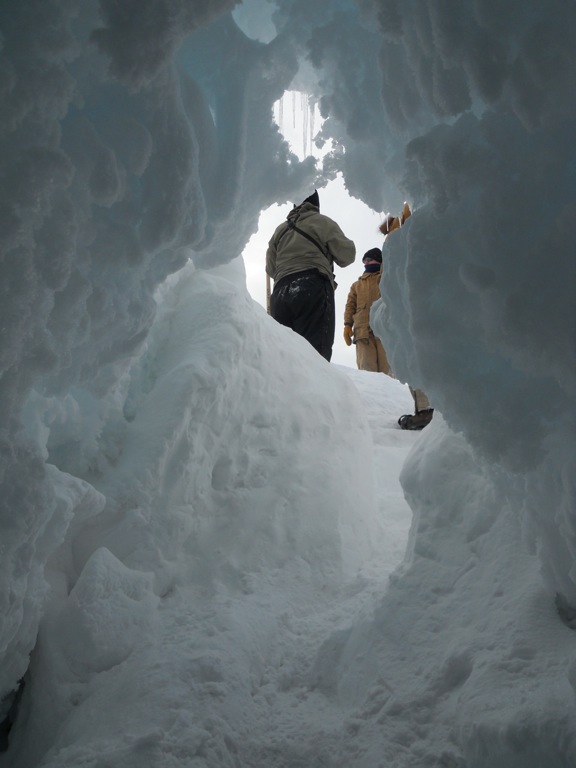
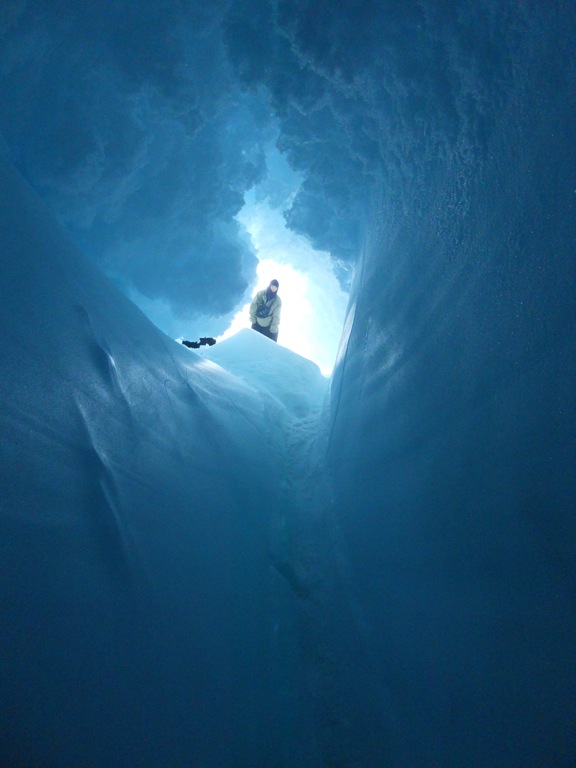
From inside the cave, looking out.
Ice crystals!

More ice crystals!

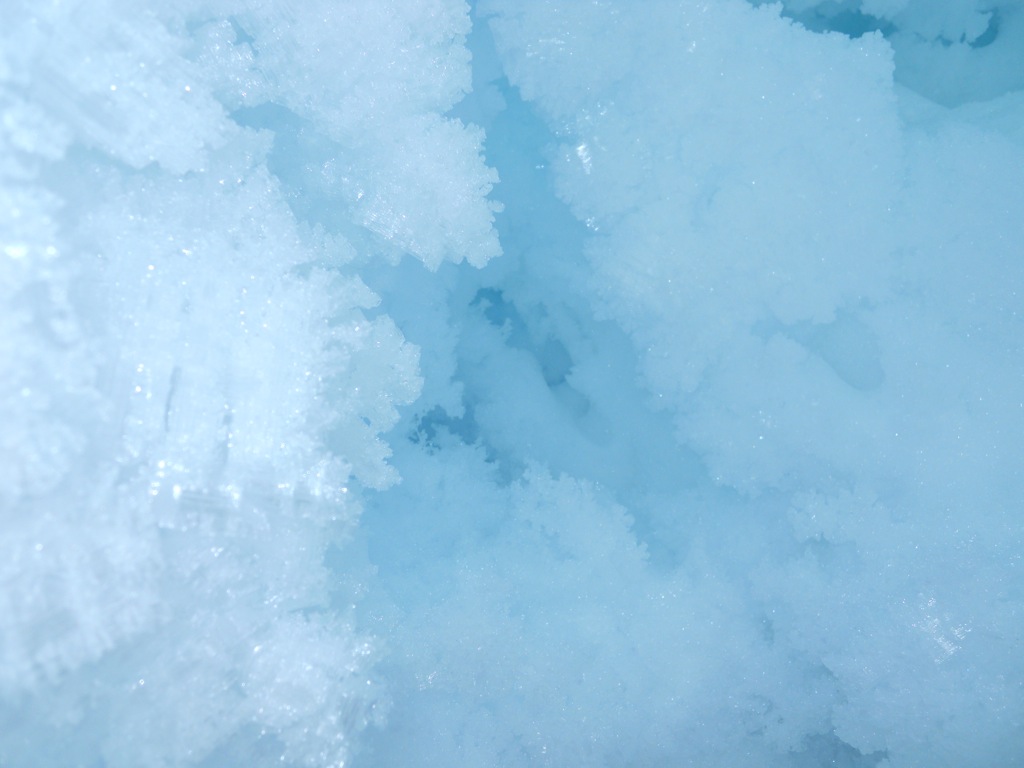
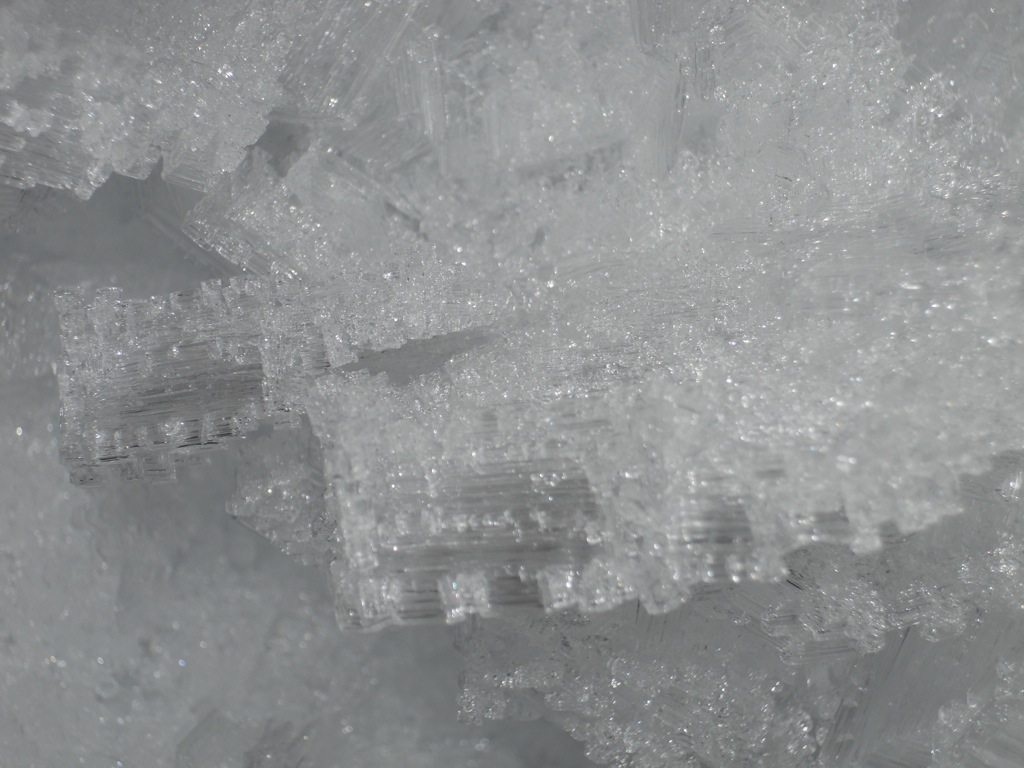
A close-up of the ice crystals.

Aren't they stunning! This crystals are each about as big as a person's finger.

Joanie stands inside the depths of the cave while I look in from the front.

A view from the depths of the cave looking out. It was so much fun sliding down the ice to the bottom. :)
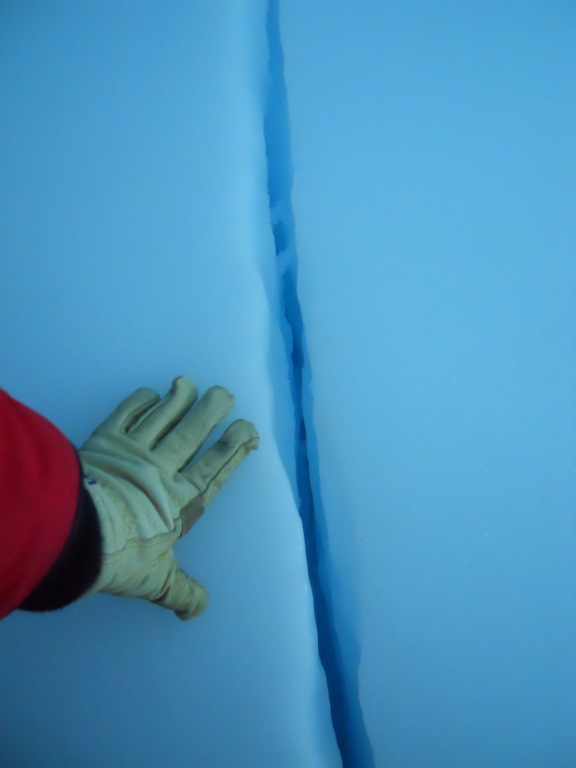
A crack in the wall of the cave, with my hand in view for scale. As the ice moves, these cracks form, many of which become humongous.

Joanie and Atlee outside the ice cave. Joanie and I are leaving and Atlee, who is also a janitor, is waiting to go inside.

After our excursion inside the cave, Joanie and I waited outside while the others in our group took their turns. During that time, I got some photos of some interesting stuff the surrounding sea ice area.

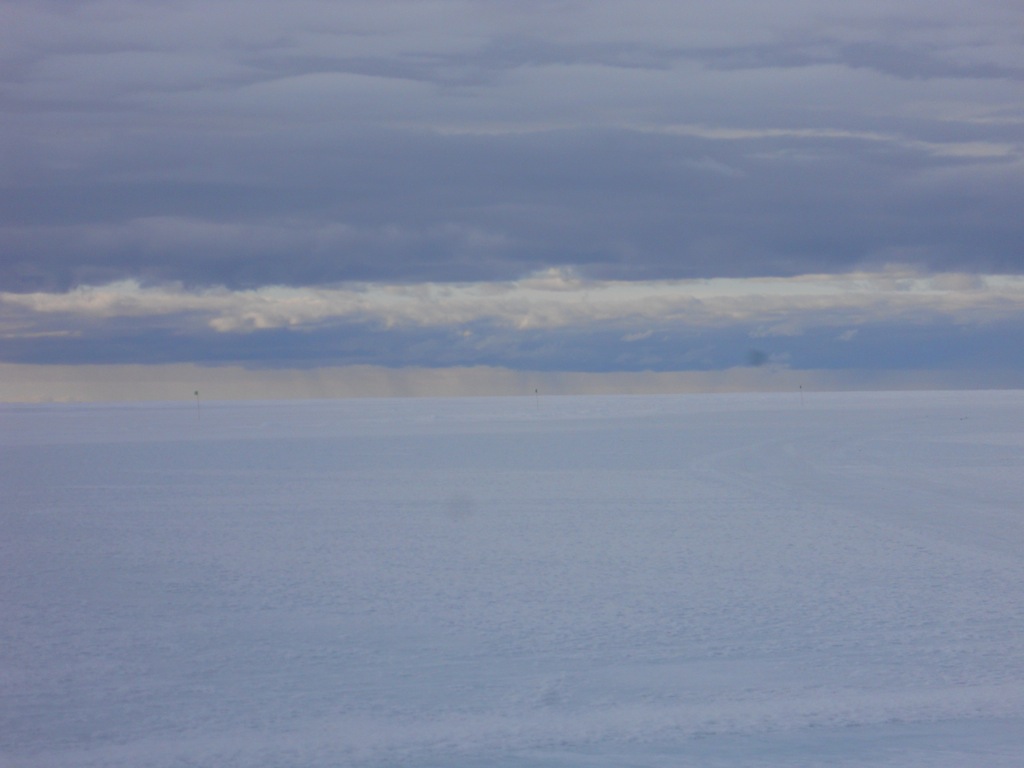
Looking north, it appears that there's rain off in the distance. Rain?! In Antarctica?! Somehow I don't think it is, but I have no idea what else it might be...

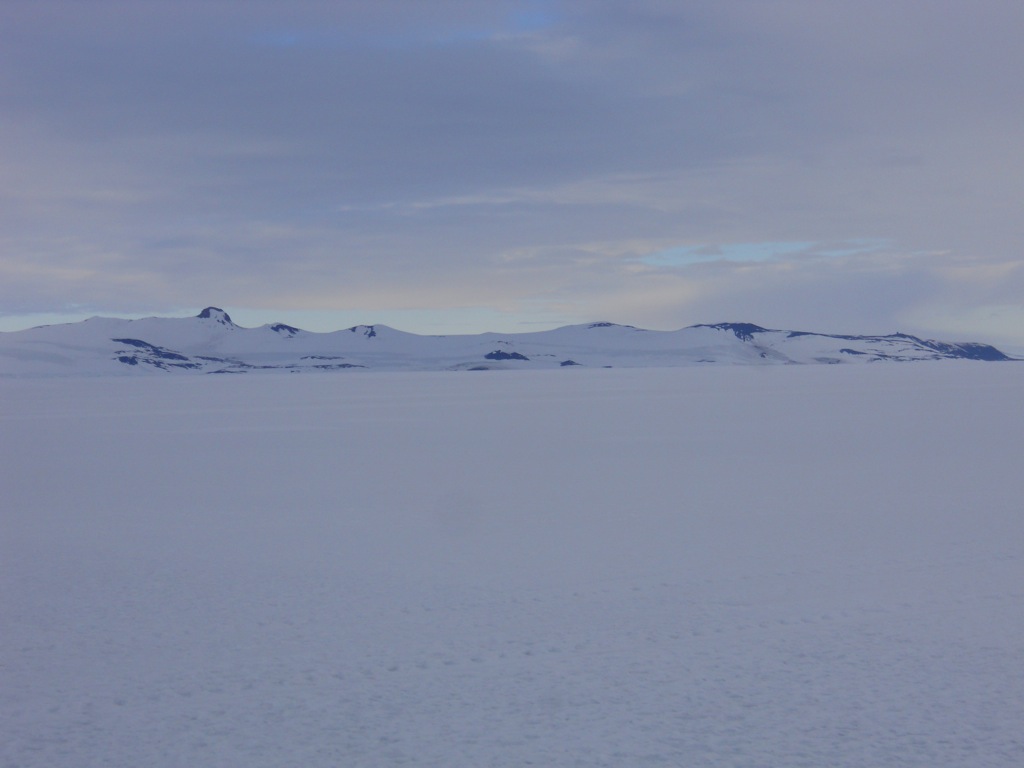
A view of the Hut Point Peninsula, which sticks out of Ross Island to the southwest. The bump on the far left is Castle Rock, which I will hike to later in the season. There will be some good photos from that adventure! :)
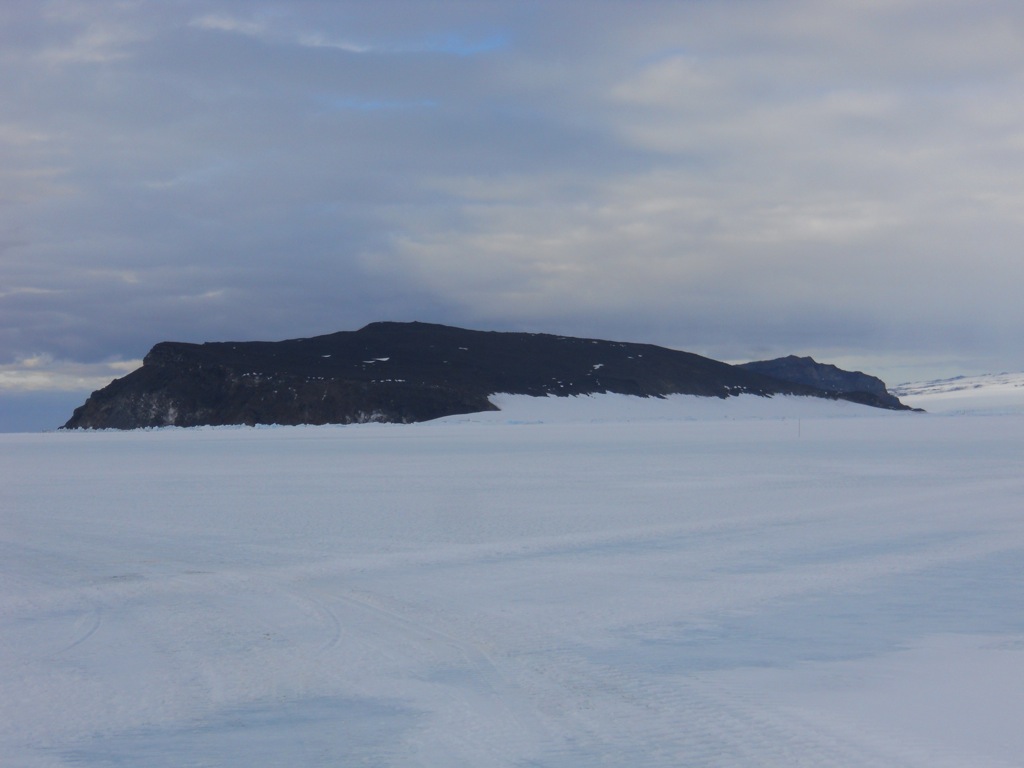
Inaccessible Island to the north.

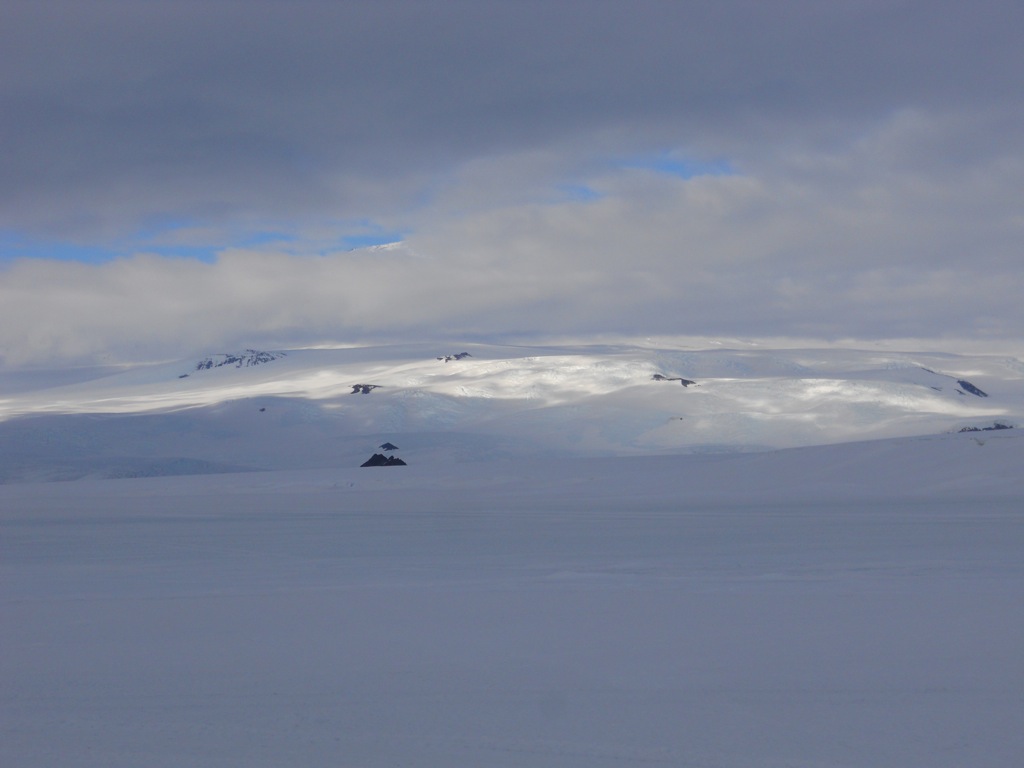
Mt. Erebus hides in the clouds while the base of the volcano gets spots of sunlight.

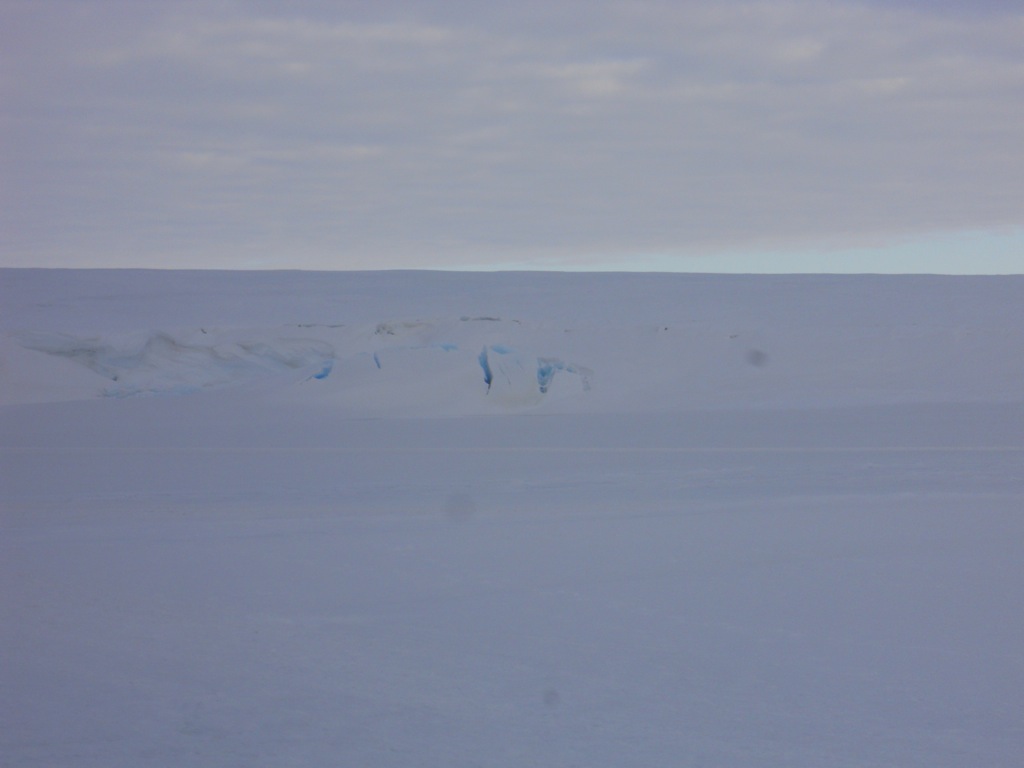
Several cracks in the Erebus glacier tongue.

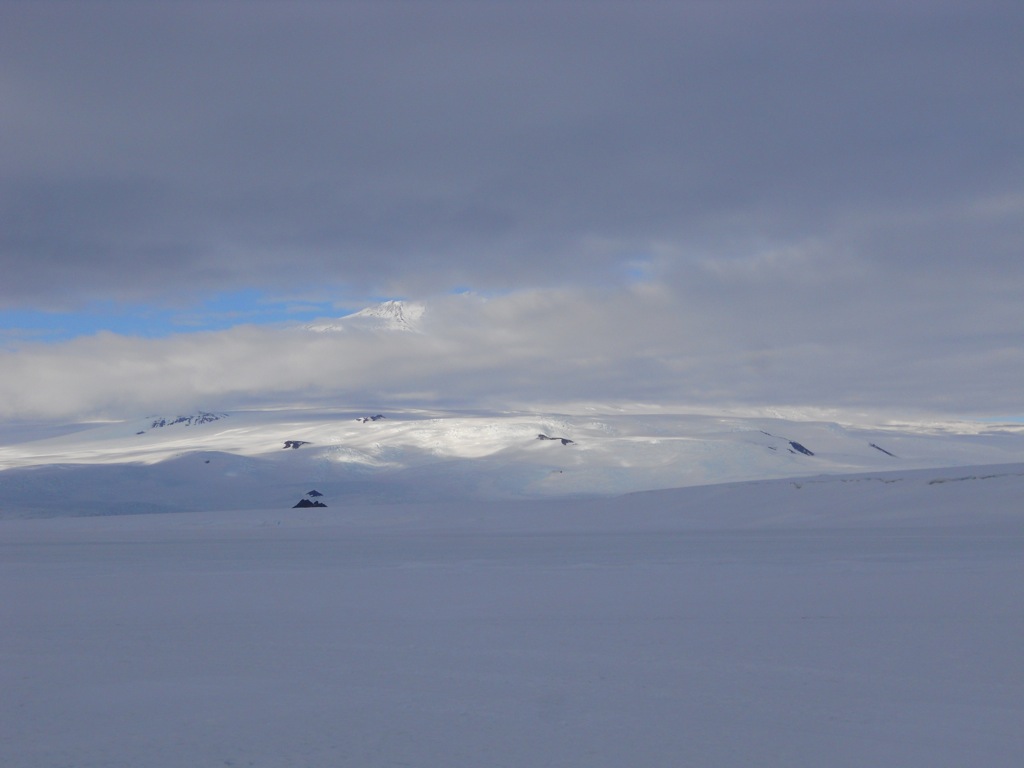
Mt. Erebus starts to peek out from behind the clouds.

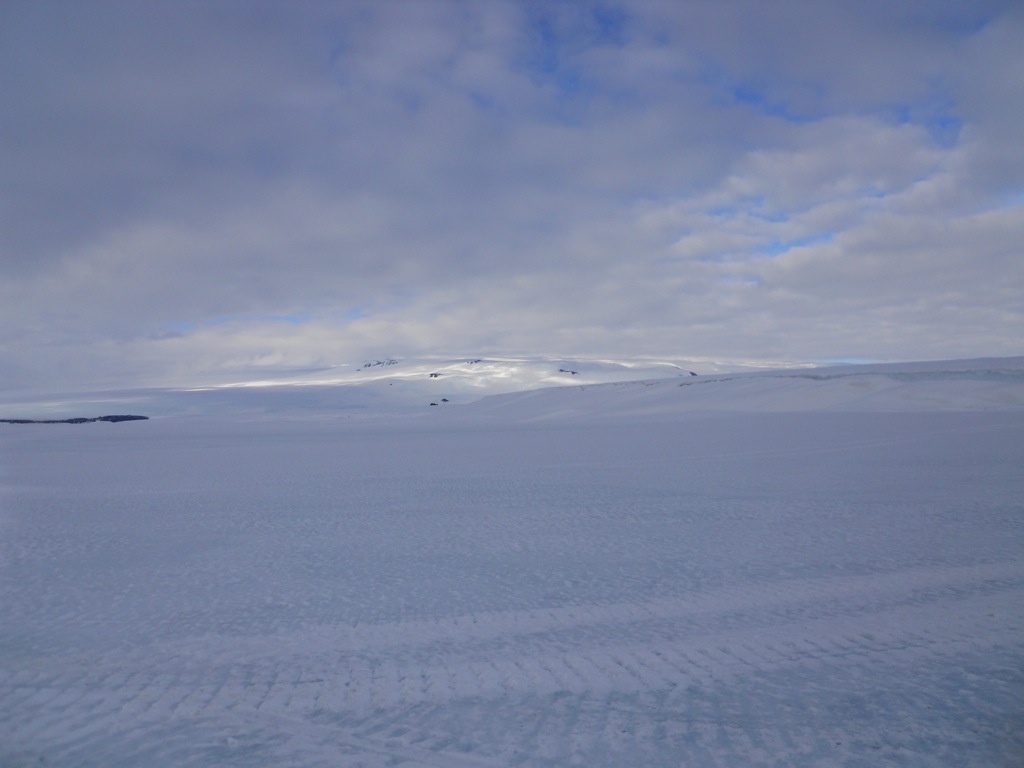
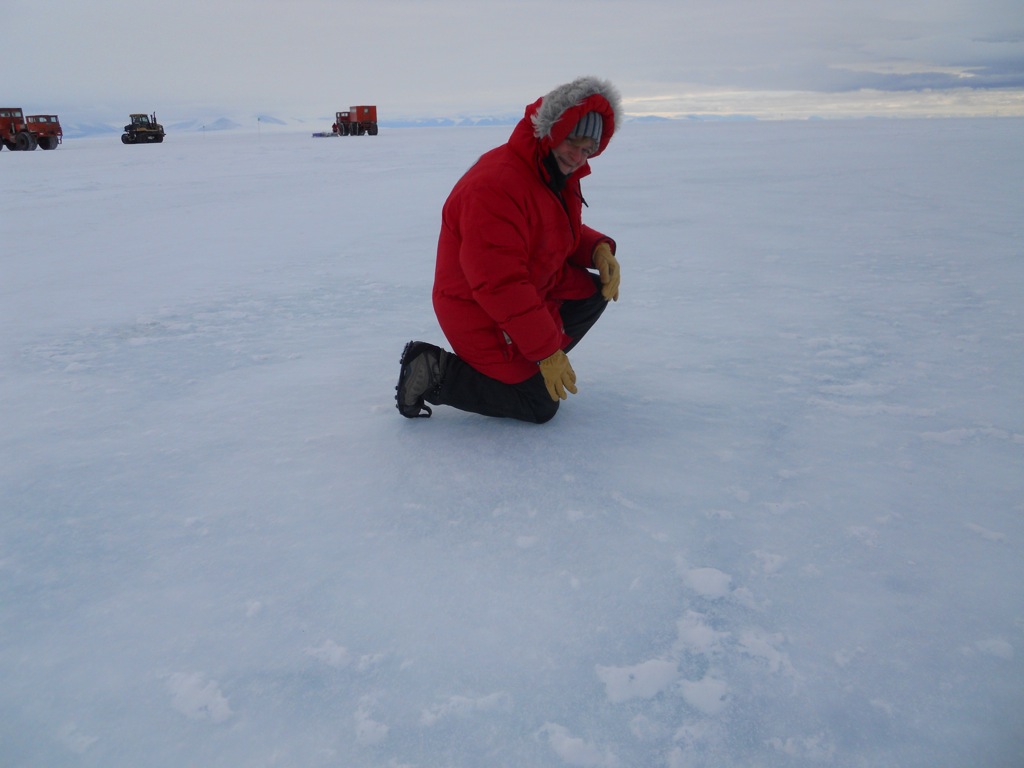
Joanie and I noticed that the sea ice, while solid, has a patchy appearance. Could it be that we're looking at pieces of ice from previous years that got refrozen into the sea ice this year? Note the bluish gaps between the white chunks.

The clouds continue to clear and the sun begins to break through to Mt. Erebus.

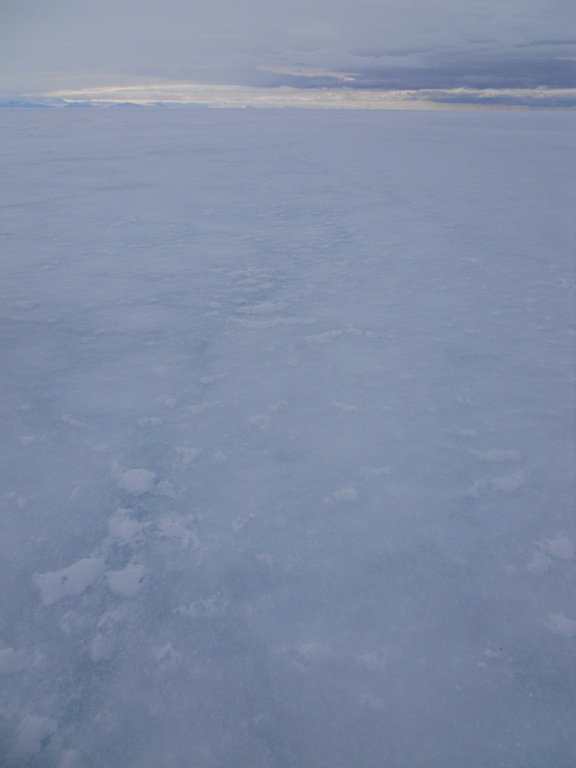
Here you can clearly see the patchiness in the sea ice.

Isn't Mt. Erebus beautiful!
Have a great week and I'll see you next Sunday! :)
Monday, November 29, 2010

Thanksgiving

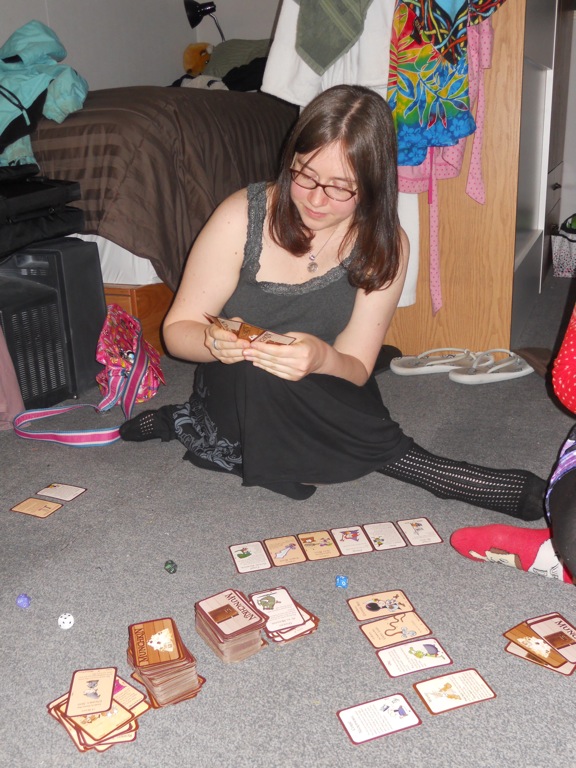
Happy Thanksgiving to all! This past Saturday, we celebrated Thanksgiving here on station with a two-day weekend and the biggest feast we've had yet! There were three dinner times, 3pm, 5pm, and 7pm, since the galley is not nearly large enough to house the one thousand plus people currently on station. Larry and I and several friends signed up for the 7pm dinner and spent the afternoon beforehand playing the card game Munchkin.

Whitney ponders her next strategic move...

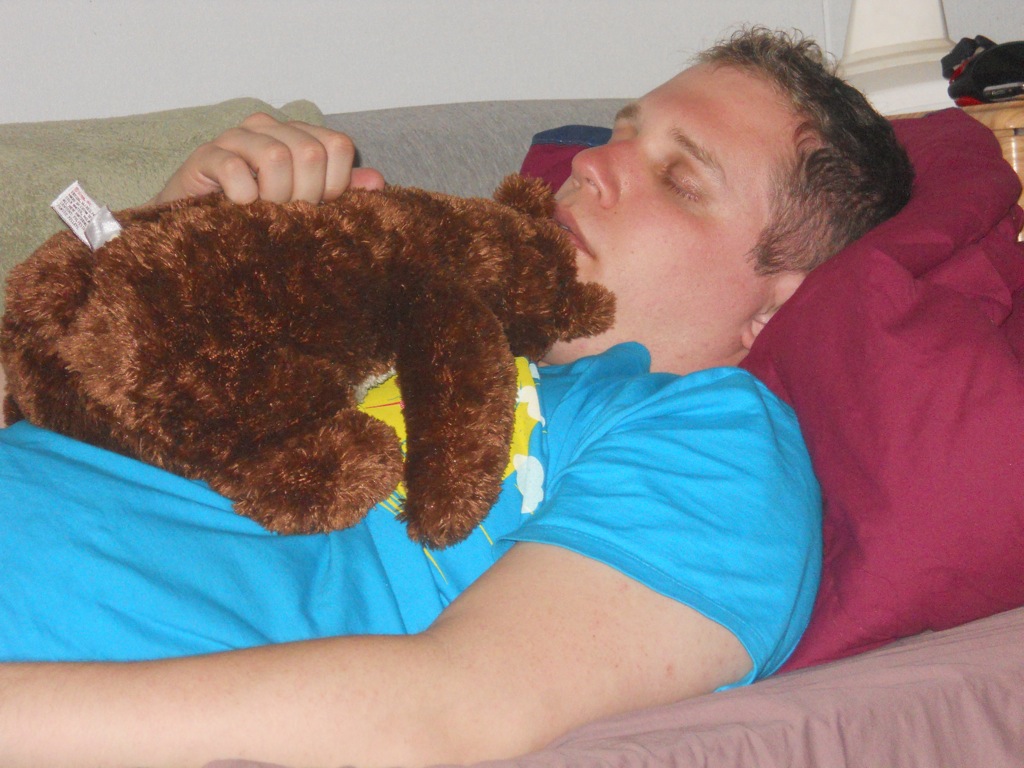
Larry was pooped and fell asleep during the game.
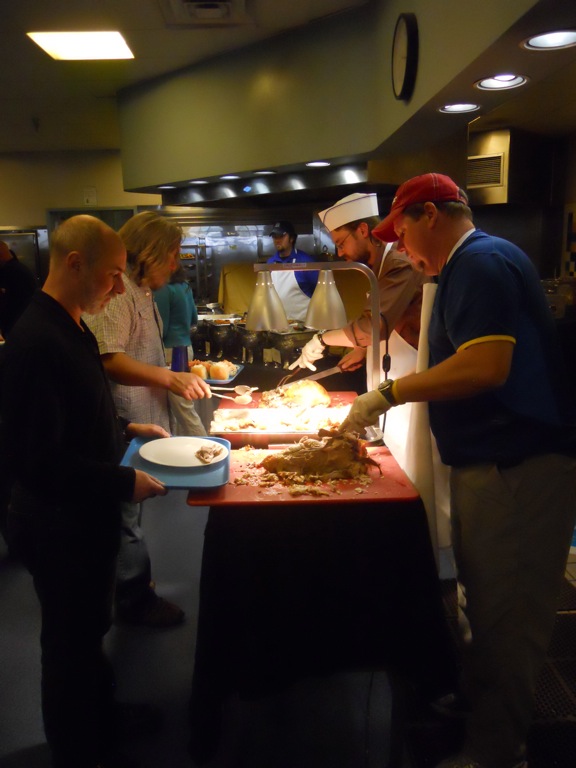
At 6pm, we got in line for dinner and managed to secure a place very near the front of the line; at 7pm sharp, the galley opened!

The table where the turkey was carved

Look at all those yummy desserts! Tiramisu, pumpkin pie, pumpkin cheesecake, chocolate raspberry torte, and so much more! I didn't have room for any of them after eating dinner, so I piled several on a plate and ate them the next morning in my dorm room.

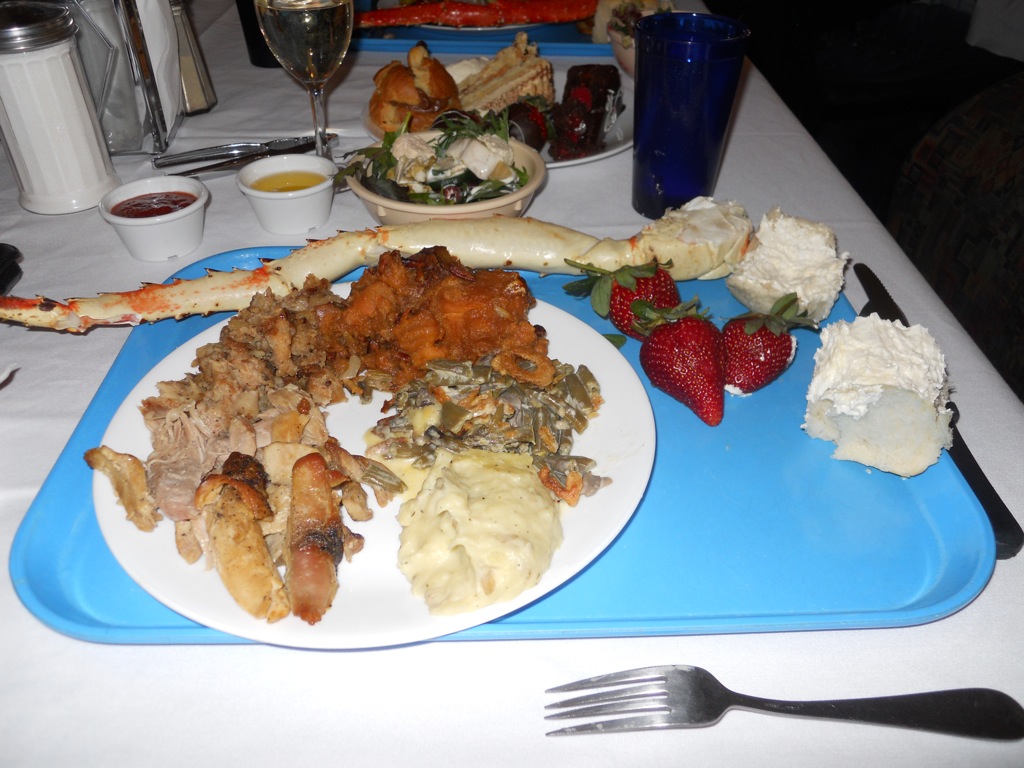
Mmmm... dinner. After three years of vegetarianism, I began eating seafood again in August. I also allowed myself a Thanksgiving turkey exception. :-) It was all very tasty!
Larry thoroughly enjoyed his meal.

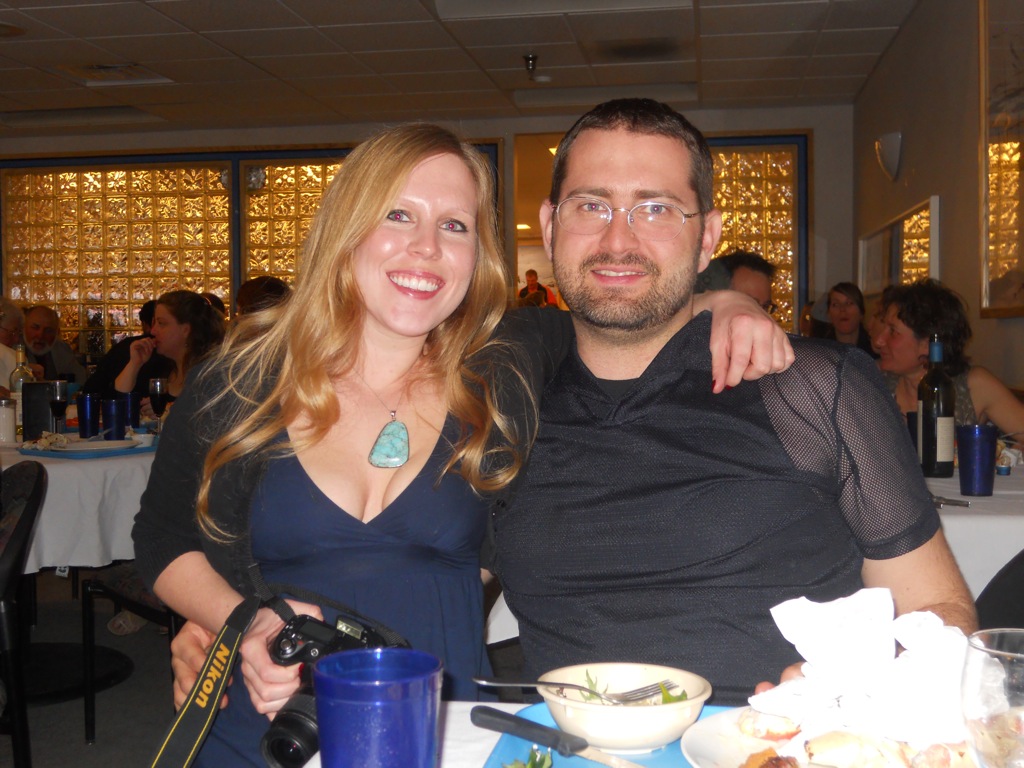
My friend and fellow janitor Aireana poses with me for a photo

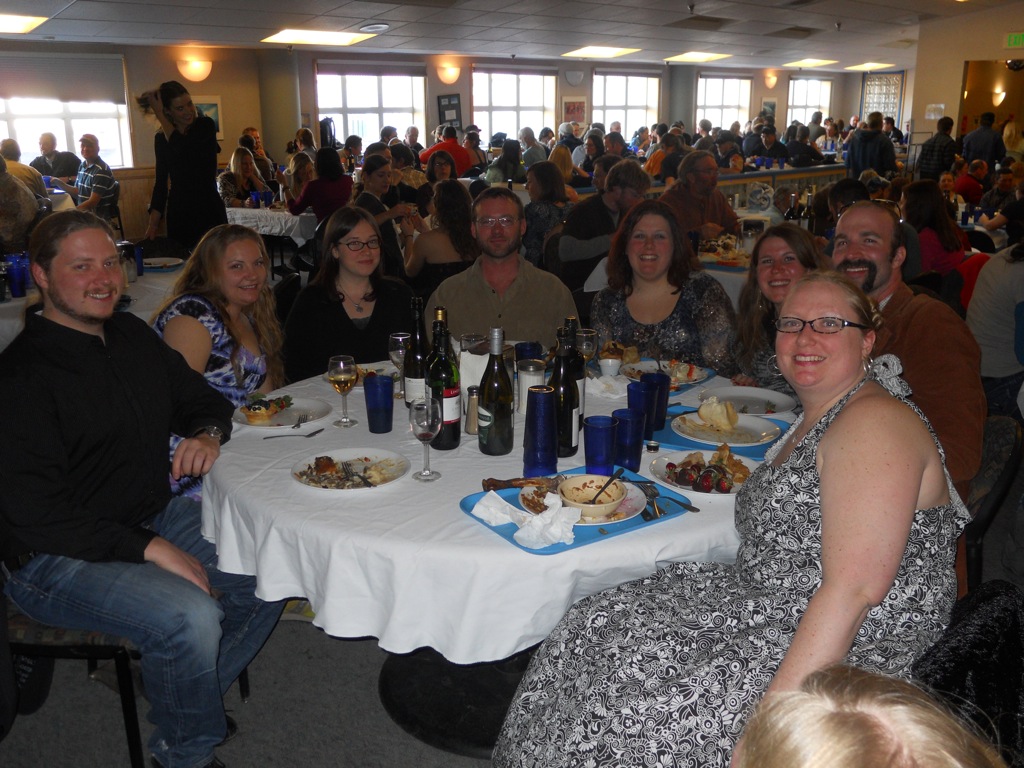
More friends! 
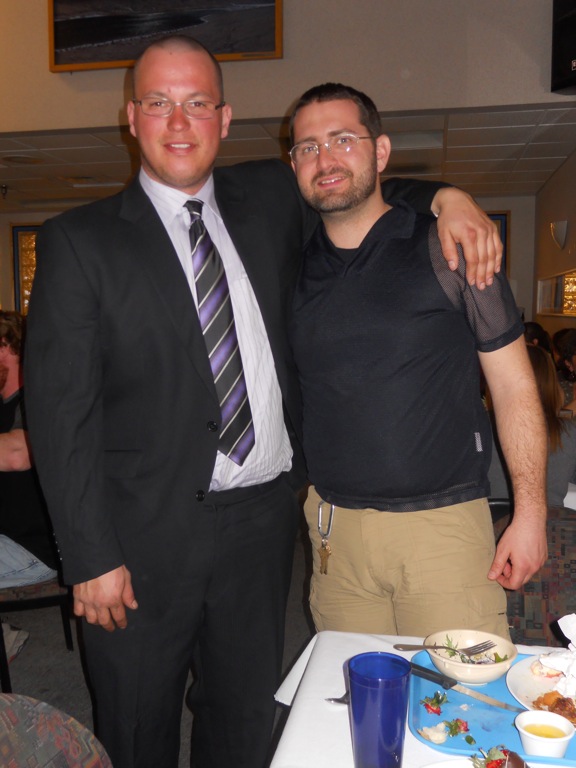
Yet another friend Brent and me
After dinner, I went home and slept like a baby. :)

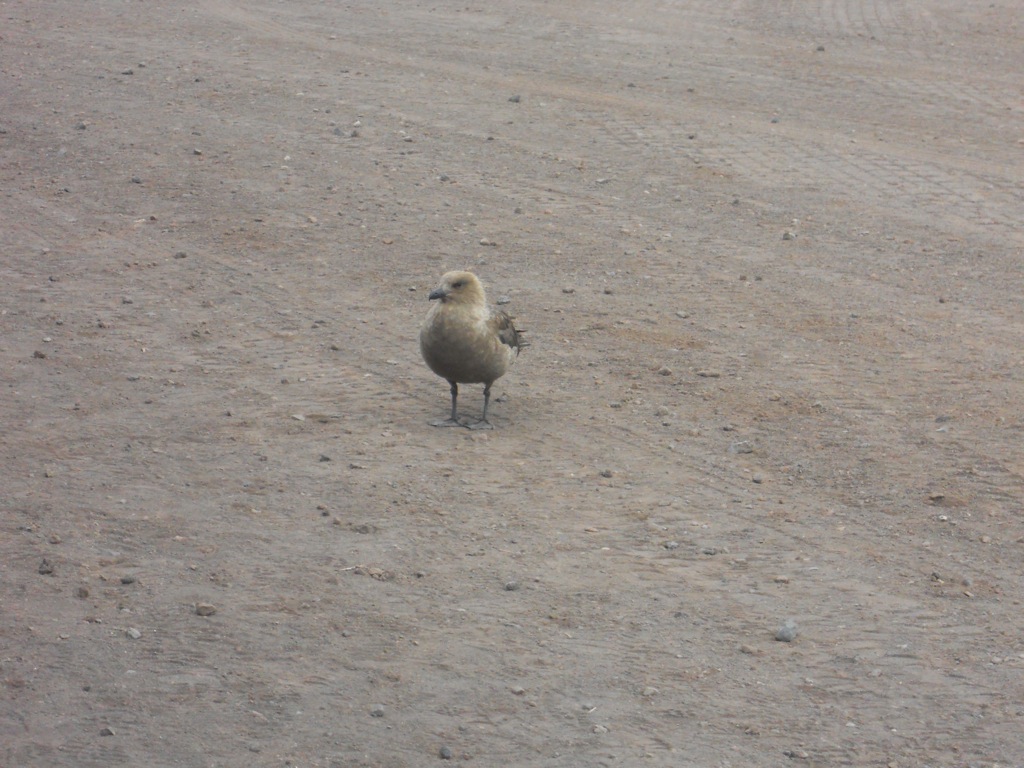
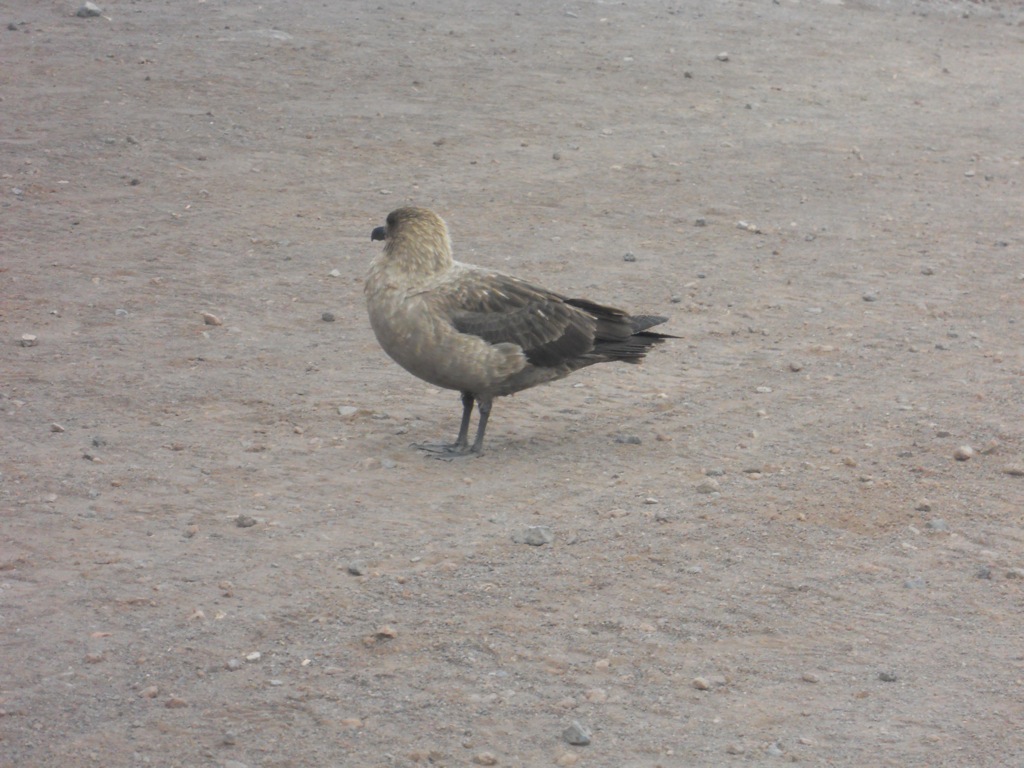
Now that it's warmed up quite a bit here, the skuas have arrived. What is a skua, you ask? It's a species of scavenger bird that feeds on the placenta of seals who have given birth. They also like to attack people who walk out of the galley with food in their hands. I saw my first skua attack yesterday! Usually, they swoop down from behind on an unsuspecting victim to startle them into dropping their food. Once that happens, the skua leaves the person alone and eats the food on the ground. They are persistent birds and are not afraid of people, which is why I was able to get a couple of close-up shots of a skua watching and waiting outside the galley.


I hope everyone had a fantastic Thanksgiving! More adventures to come!